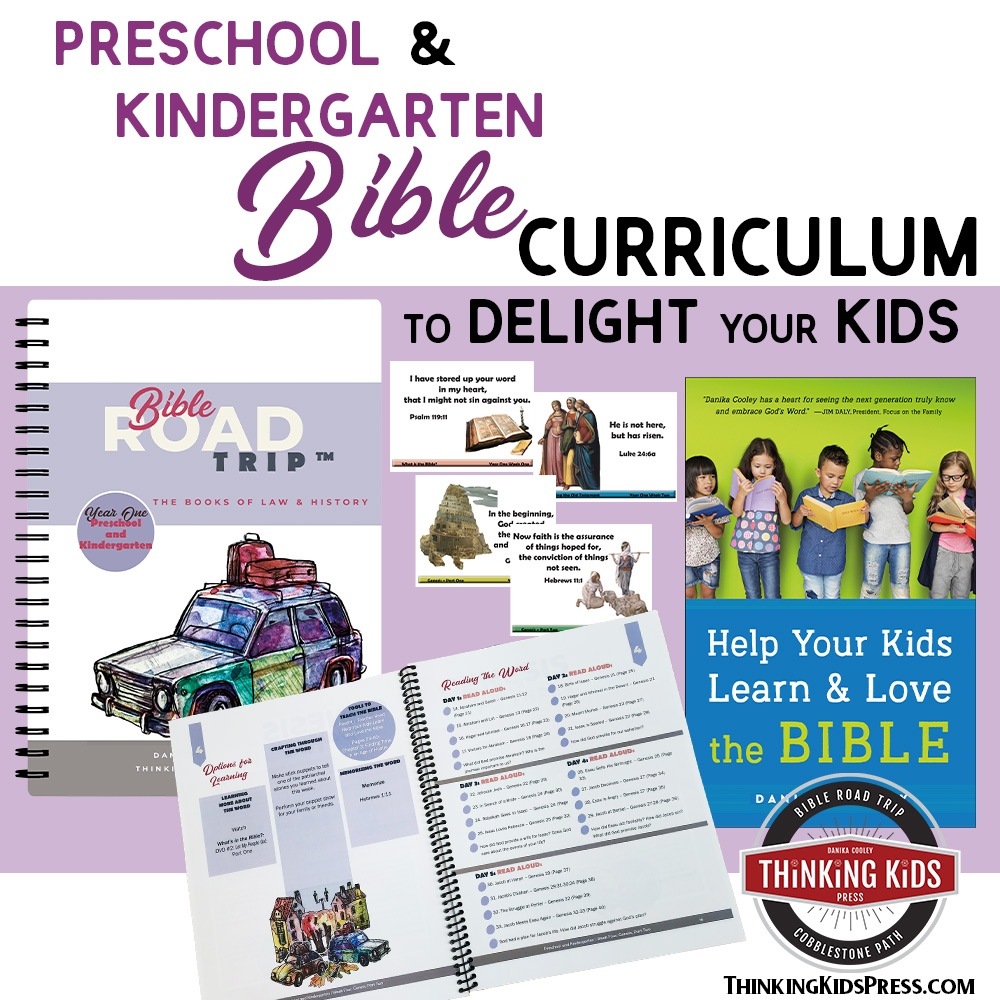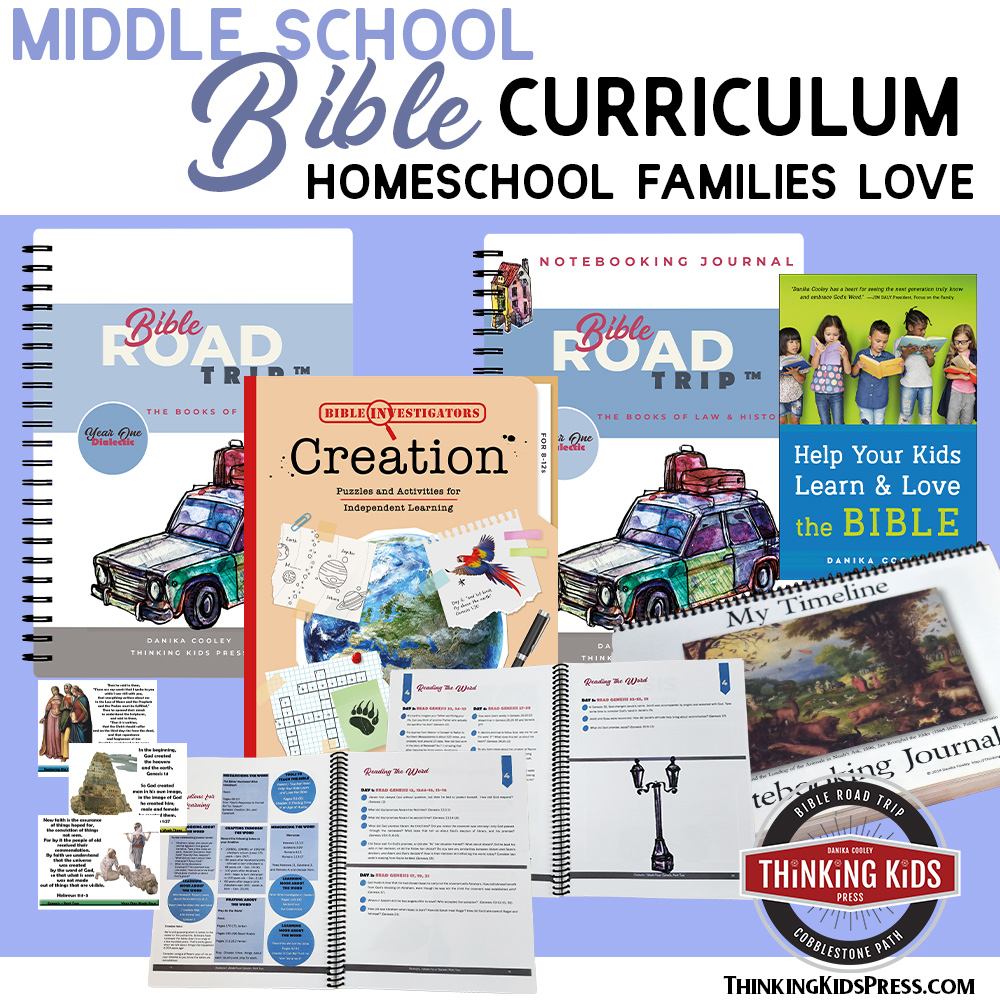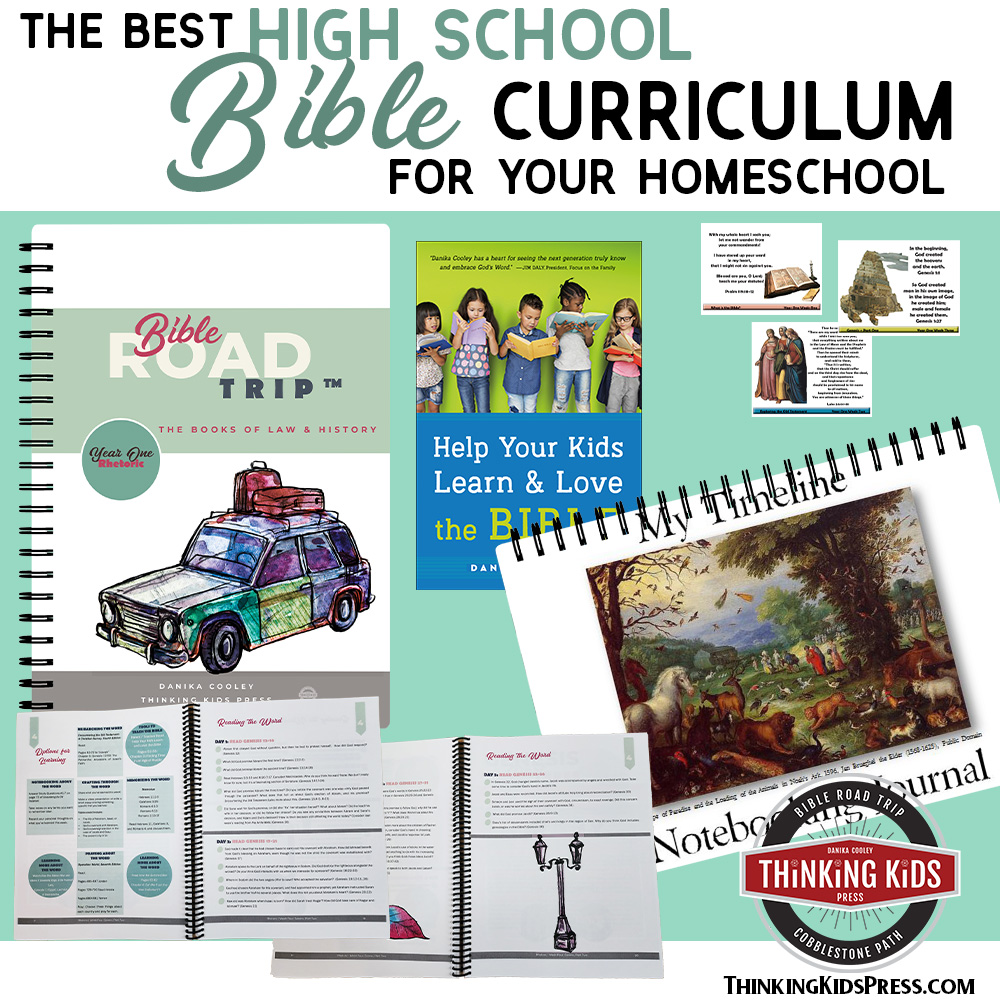

Looking for the best homeschool Bible curriculum for elementary students? Your family will love this three-year trip through God’s Word.

I started homeschooling our younger two children in first and second grade. It was a wonderful experience, all the way through high school.
As I searched for a Bible curriculum, I found that most elementary Bible curricula used retold Bible stories, and condensed the story line of Scripture to the most well-known narrative. I was so disappointed.
I wanted to take our children through the Bible in a way that would involve reading from God’s Word, that would incorporate fun activities, and that would allow our children to memorize Scripture. I firmly believed that if we took our children through the Bible several times in the years they were at home, they would know and love God’s Word. I wanted to teach the grand, overarching themes of God’s great story for us. And, I wanted to use classical Christian education philosophy to do it. I needed a resource that would incorporate great Bible-teaching tools, and would be open-and-go for us as a family.
So, I wrote Bible Road Trip™. Starting in second and third grade, I took my boys through the Bible in three years. Then, we did it again, at a deeper level of study.
In the years my boys were at home, we went through the Bible together nearly four times cover-to-cover. Today, they know God’s Word, and they can engage with others, both in defense of sound doctrine, and to share the gospel.
You, too, can take your elementary aged kids through Scripture cover-to-cover. With this open-and-go resource, your family will know and love God’s Word.

The Best Homeschool Bible Curriculum for Elementary Aged Kids …and for Family Worship!
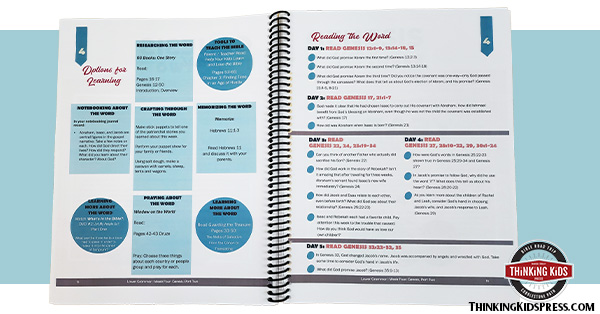
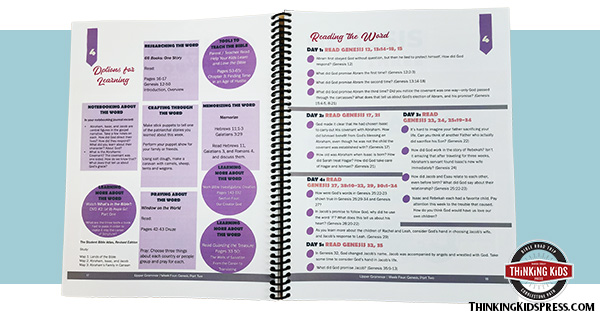
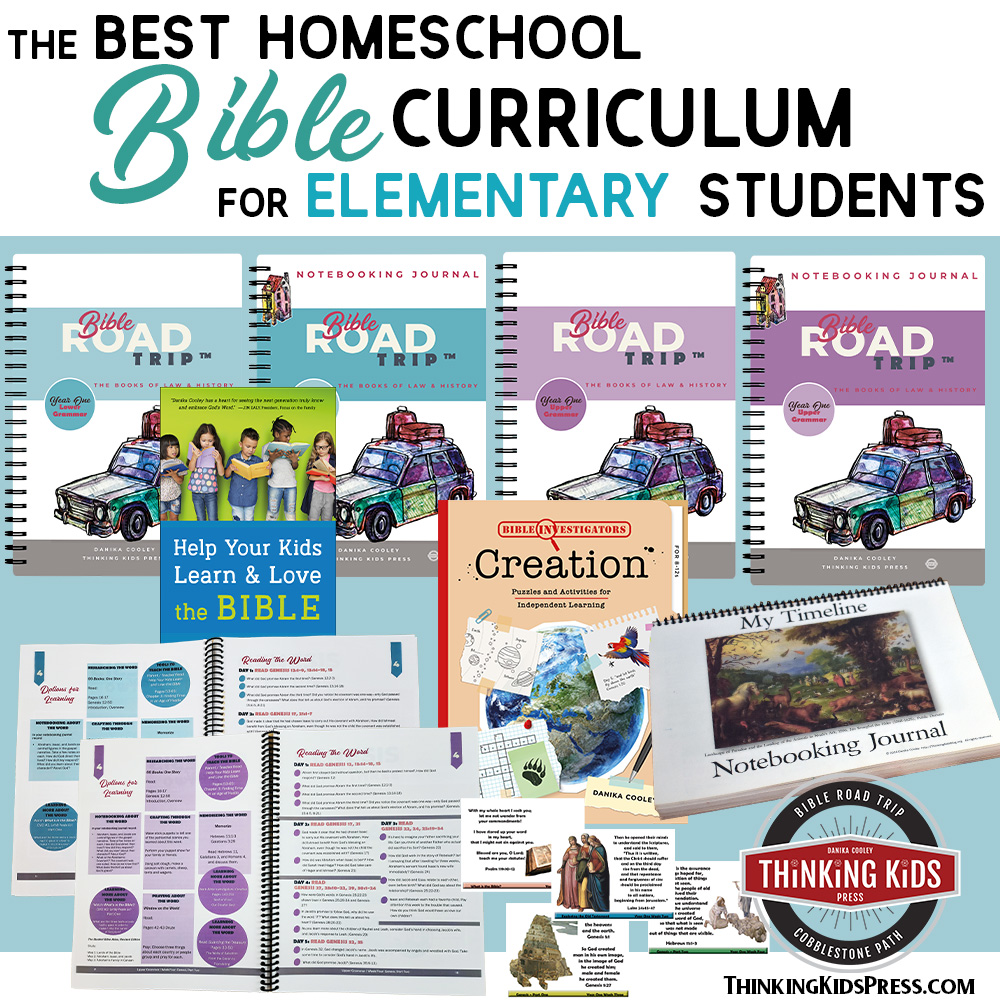
Bible Road Trip™ for your elementary-aged children allows you to spend time each week exploring God’s Word as a family. Elementary students can study at two separate levels:
- Lower Grammar | This level is intended for grades 1-3. Families will generally read 1 chapter or several sections each day.
- Upper Grammar | This level is intended for grades 4-6. Families will generally read 2 chapters each day.
Notes on using elementary levels in your family:
- Some books, like Genesis, will involve more daily reading. Weeks that involve extra reading can be spread over two weeks, if it fits your family’s schedule better.
- Do you have children in both the Lower and Upper Grammar levels? You can always use the Upper Grammar curriculum for both and remove some of the activities for your first through third grade students. You will want to use the appropriate notebooking journals for each level, as the line width and content is age-appropriate.
The curriculum uses classical Christian education principles as the underlying philosophy. Your elementary-aged children are excited about learning. Their brains are primed for memorization, and hands-on activities help them understand abstract ideas in a concrete way. This is the perfect time to help your children think deeply about Scripture, to give them important Bible verses to memorize, and to teach them to write about truths that matter.
As your child grows, your family can take them through the Bible three to four times before they graduate, each time exploring God’s Word at a deeper level. The Lower Grammar or Upper Grammar curricula will lay the groundwork for your children as they learn to study Scripture, setting a rhythm for daily study in their lives.
Each year of the three-year Bible Road Trip™ curriculum involves 32-weeks of study. Each week moves students through the Bible from Genesis to Revelation, in a unit study style method, with students studying books of the Bible for one to five weeks per book.
- Bible Road Trip™ Year One covers the books of law and history (Genesis to Esther).
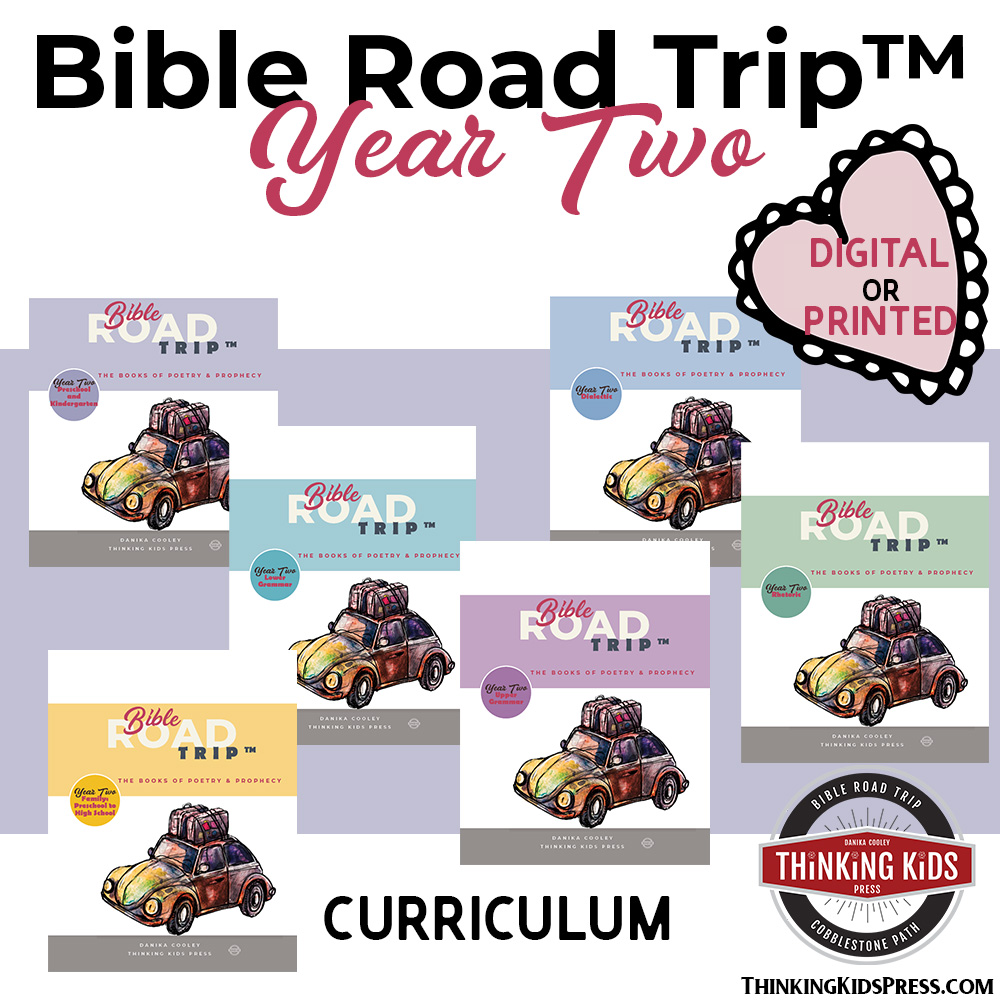
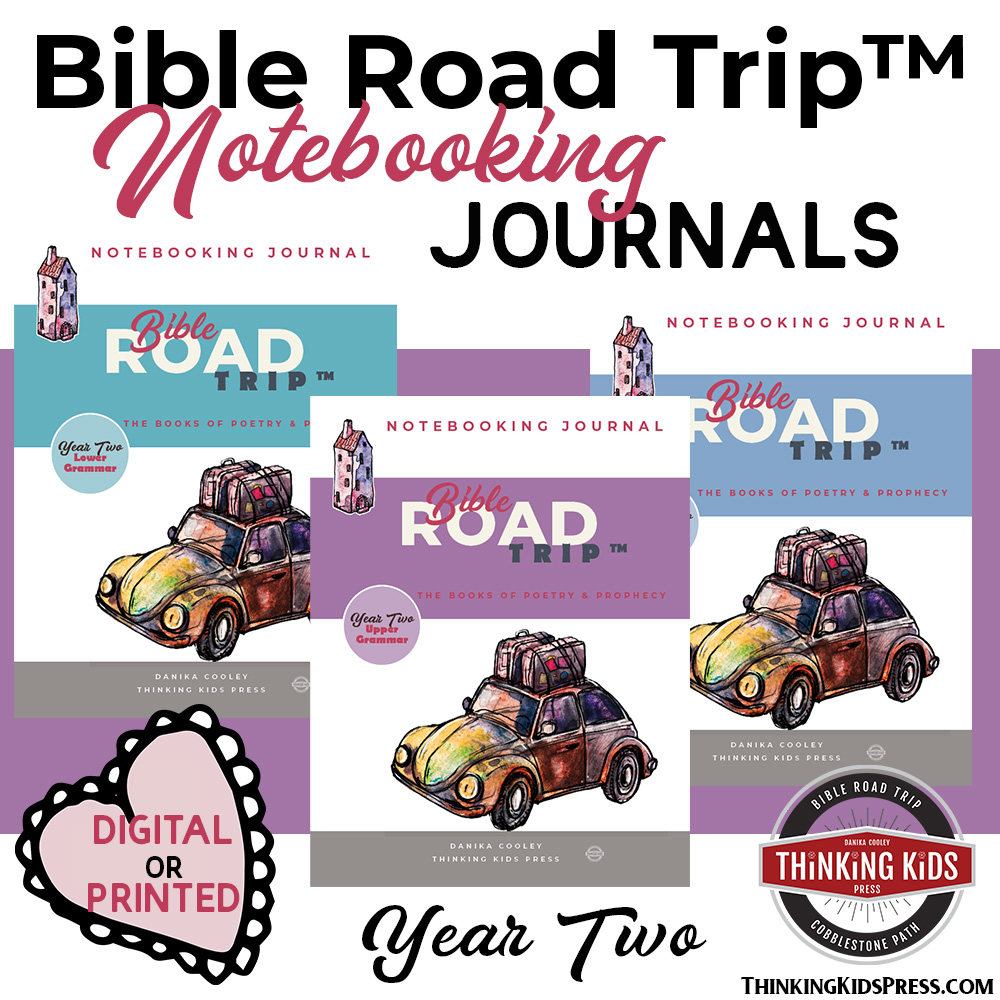
- Bible Road Trip™ Year Two covers the books of poetry and prophecy (Job to Malachi).
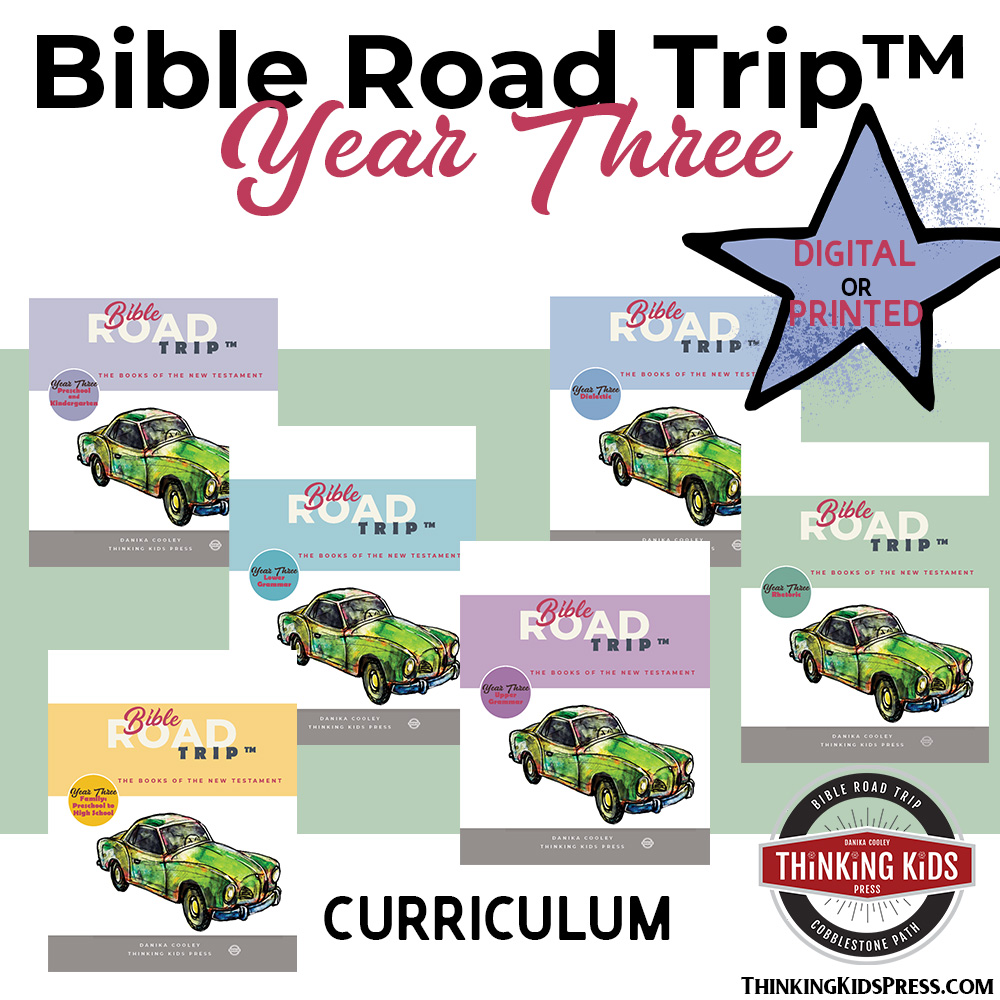
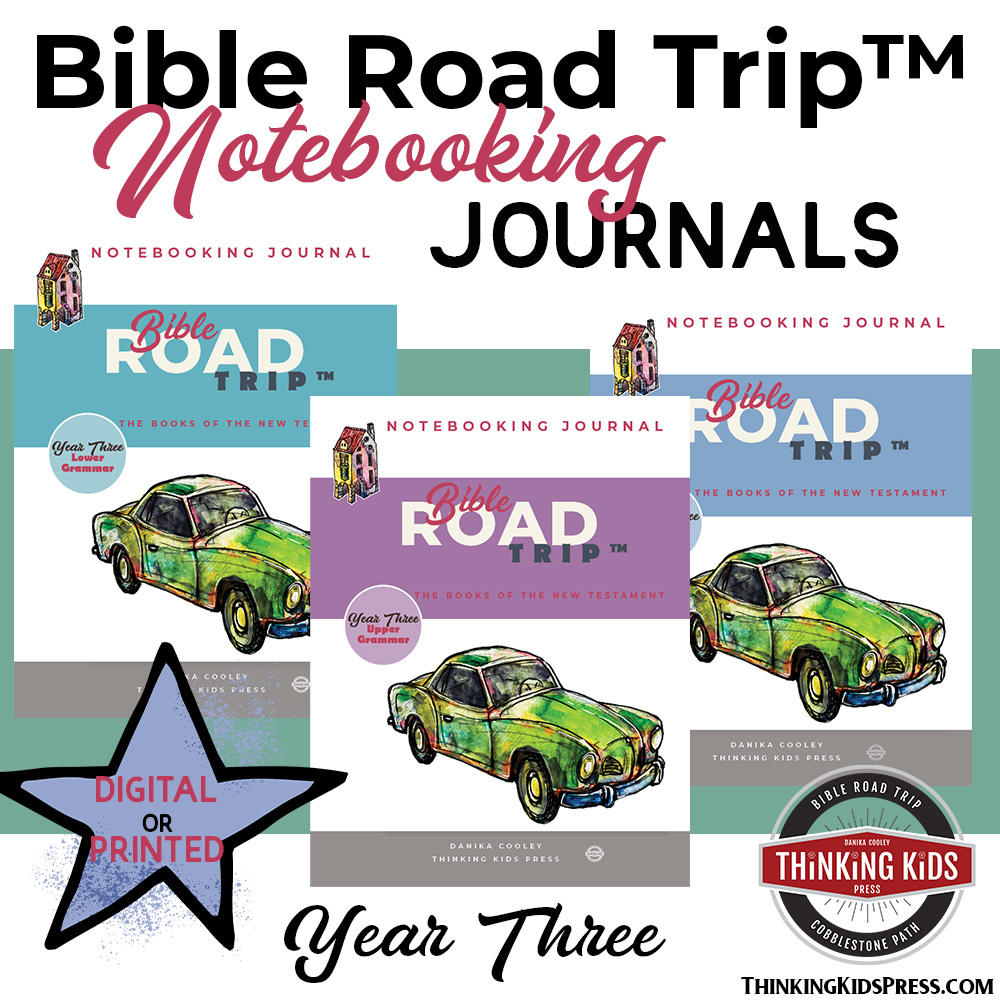
- Bible Road Trip™ Year Three covers the books of the New Testament (Matthew to Revelation).
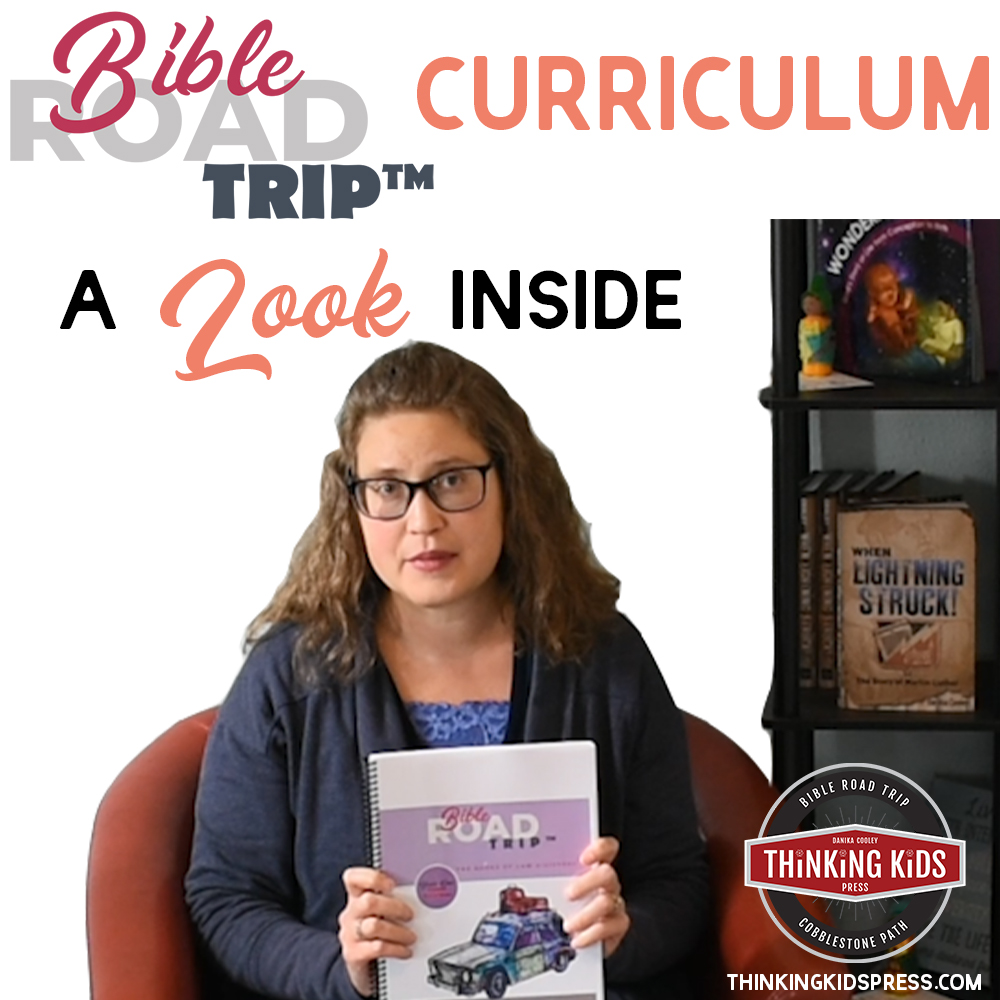
Take a look inside the Bible Road Trip™ curriculum! Let me show you around:
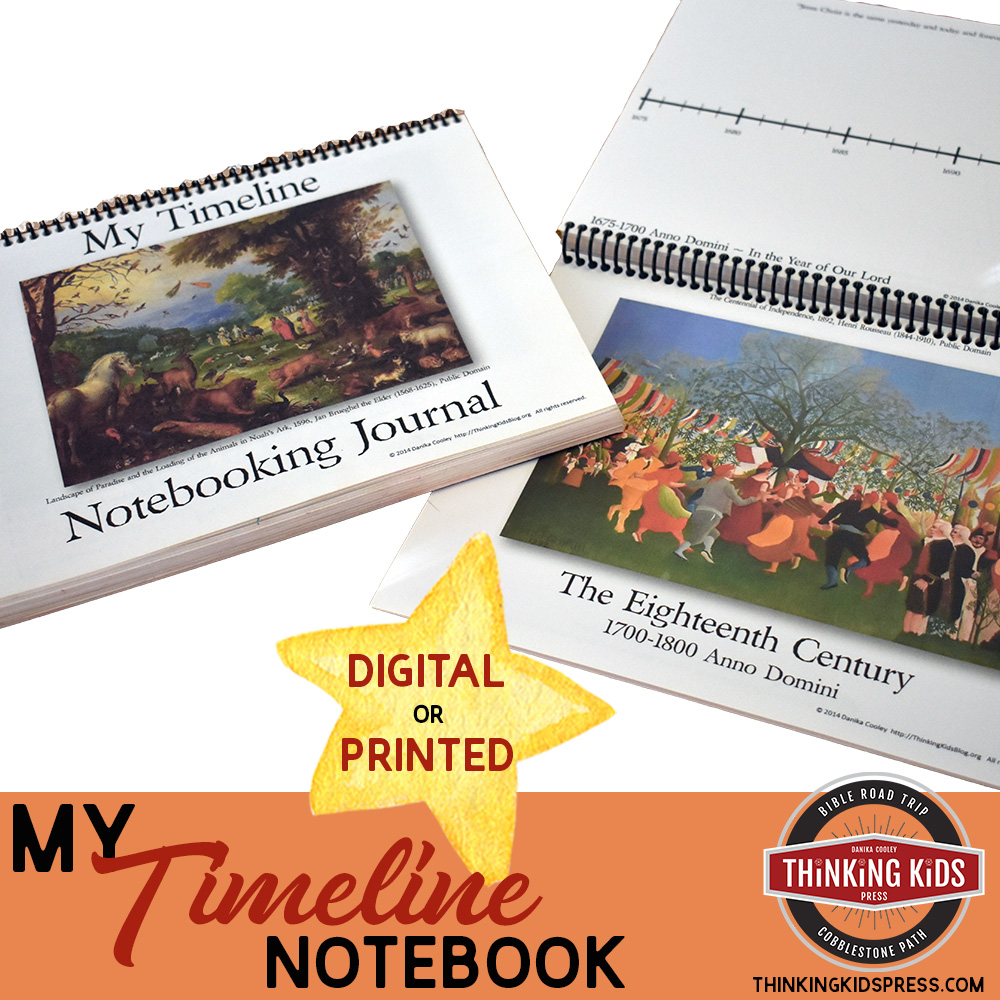
Take the Learning to the Next Level with Notebooking
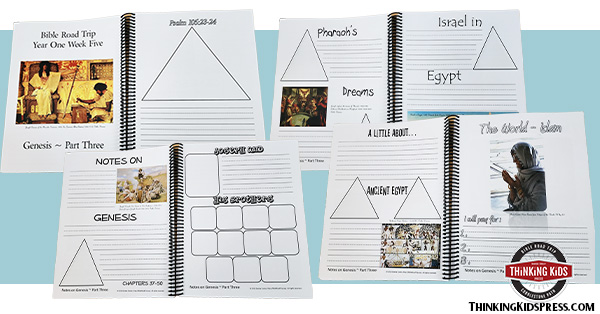
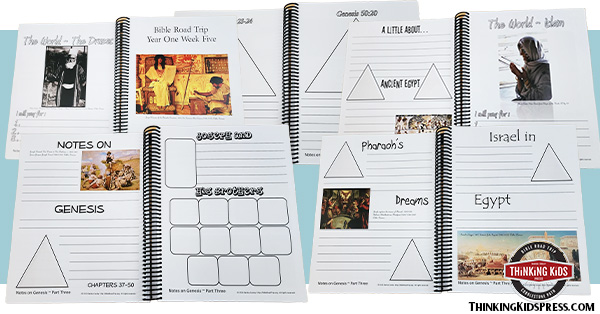
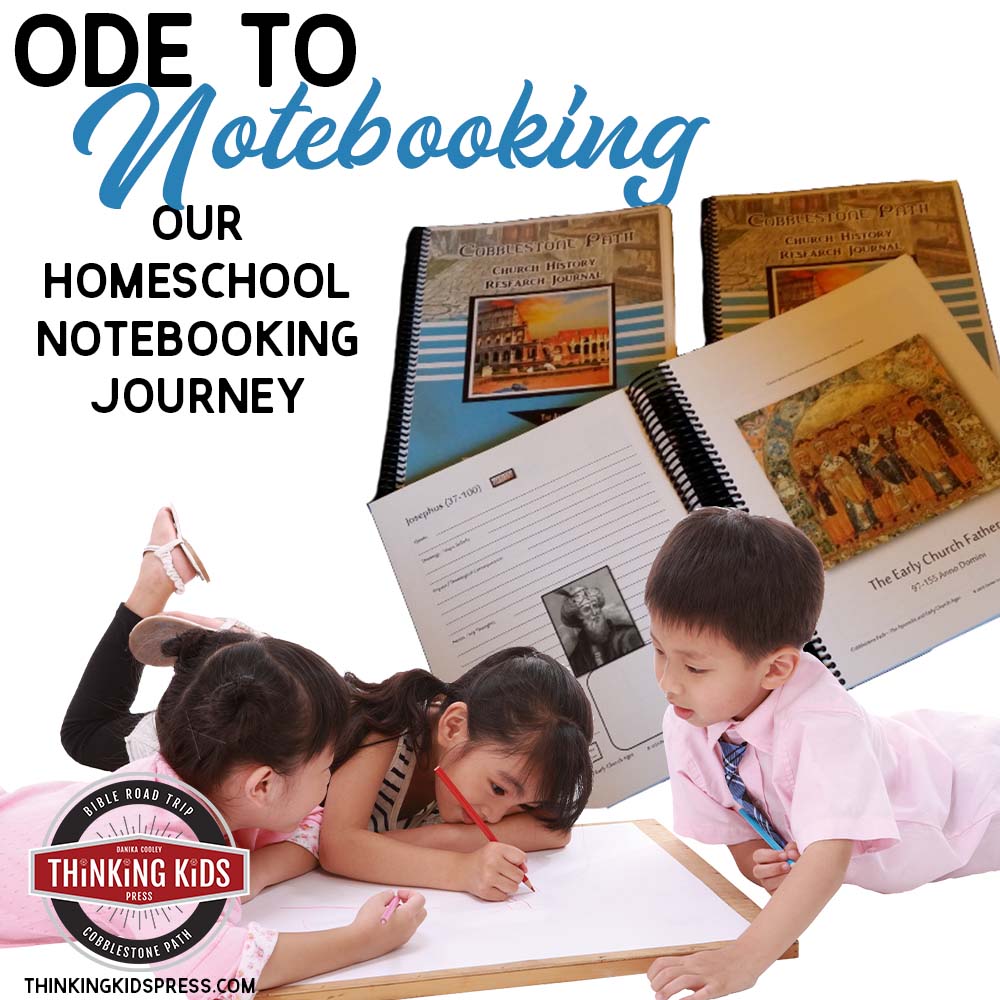
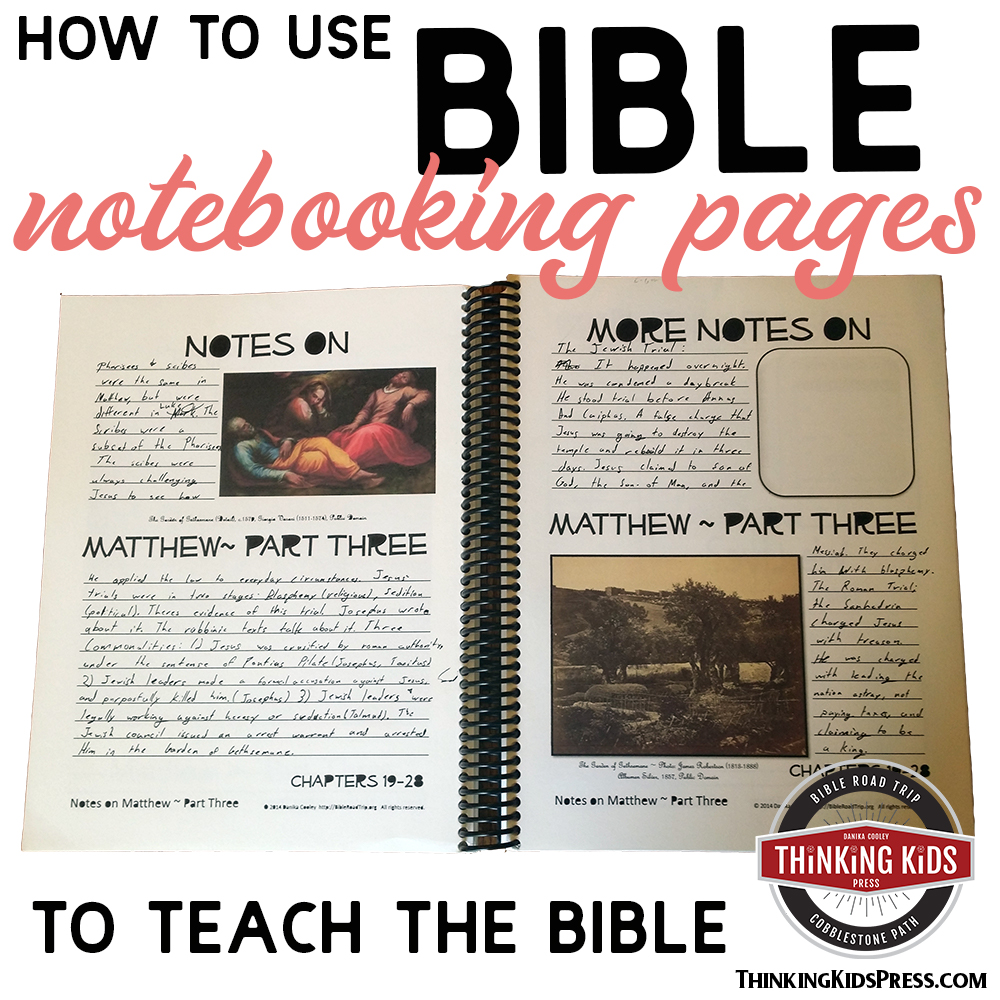
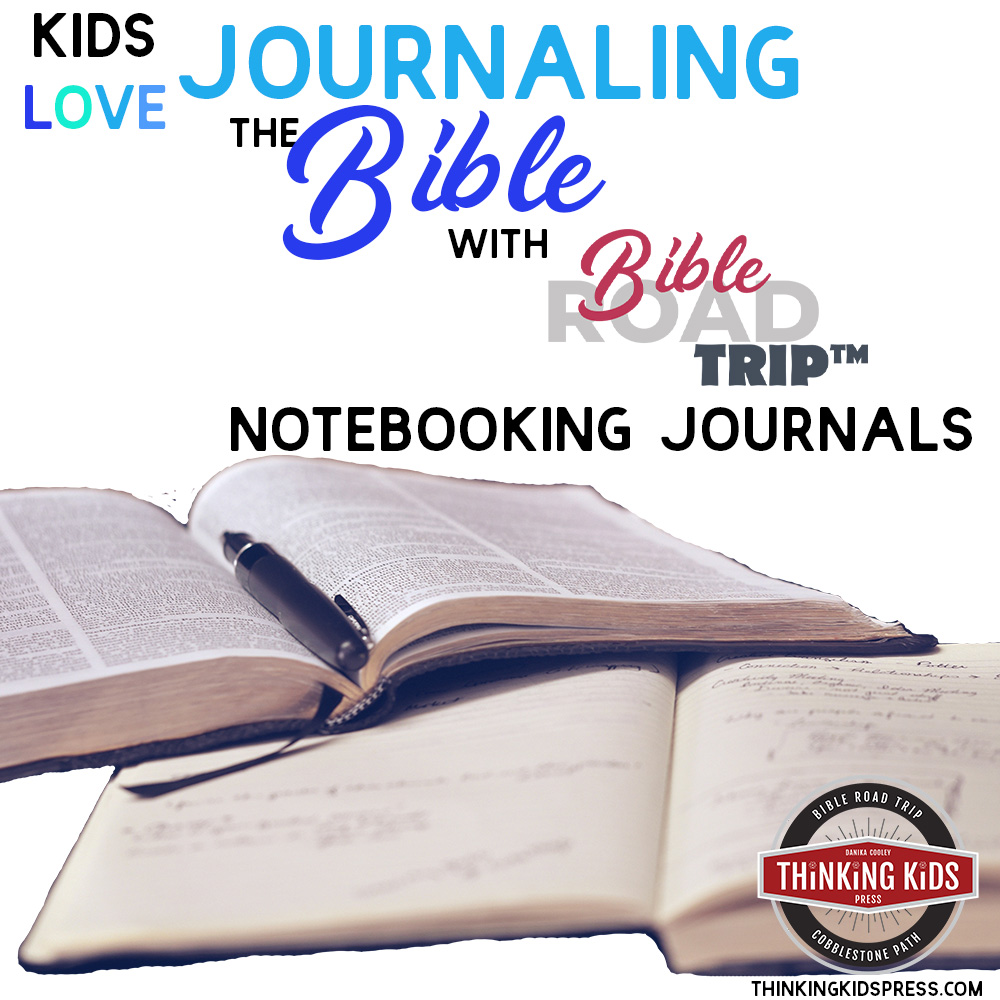
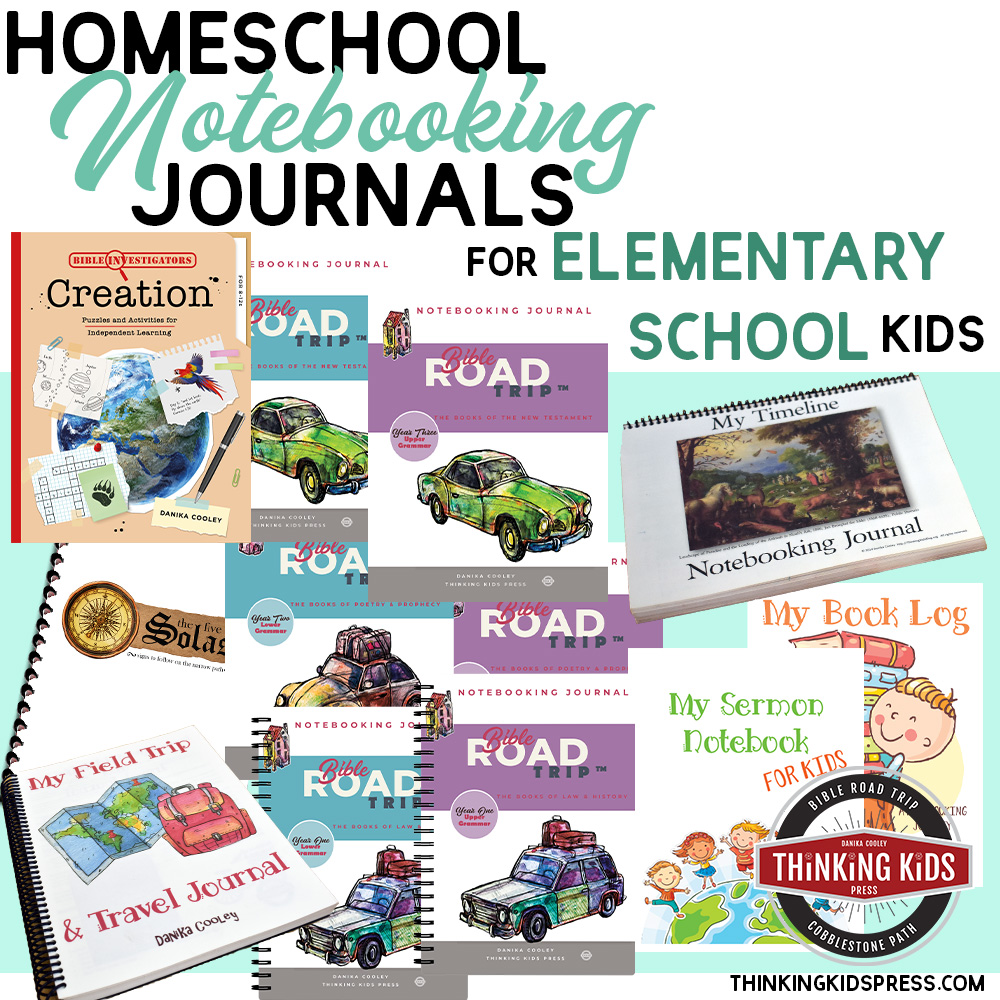
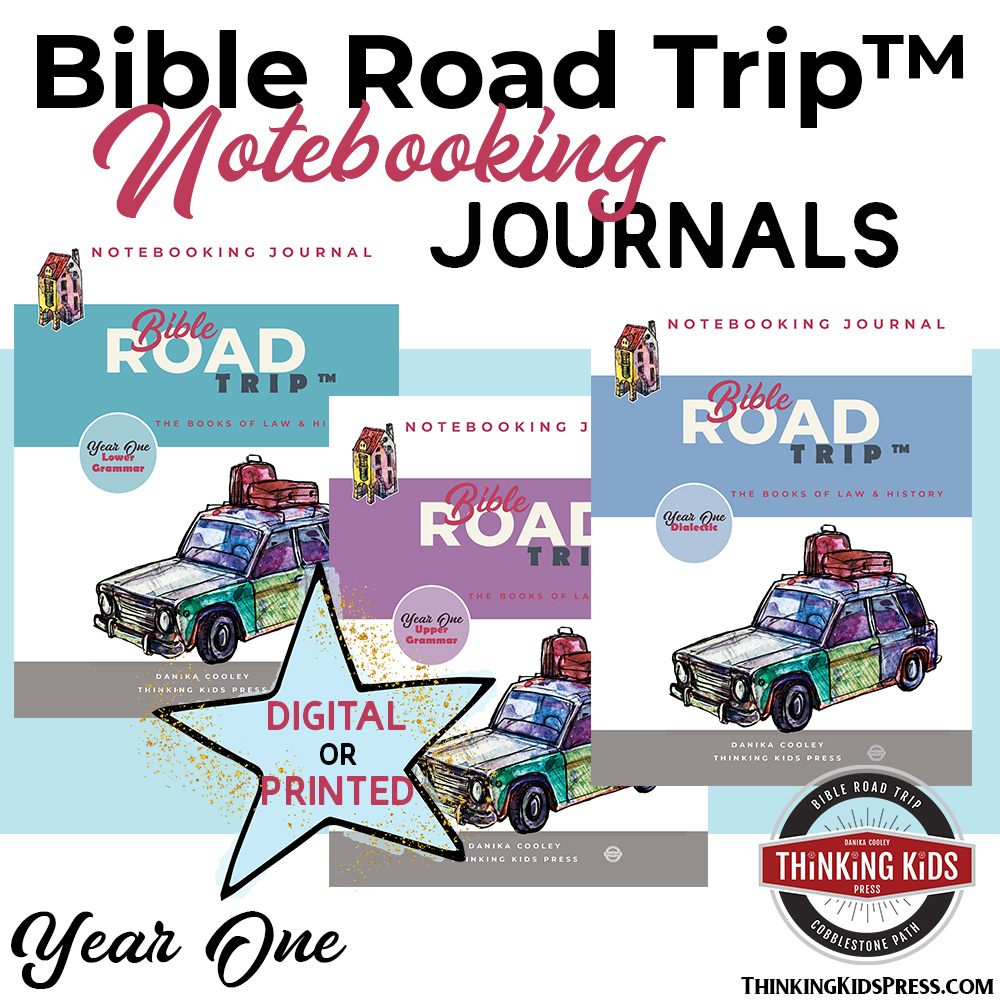
Notebooking is a wonderful way for your elementary-aged students to expand their study of the Bible.
For younger kids, the Bible Road Trip™ notebooking journals are a great way to incorporate language arts in your homeschool.
Notebooking develops a number of vital skills:
- Handwriting | The process of writing long-hand naturally helps develop handwriting.
- Reading and Listening Comprehension | Notebooking requires attention and understanding of the information being processed and narrated in written or visual form.
- Pre-writing | Notebooking helps students learn to take notes, to identify important information, and to organize their thoughts. It helps them make note of what they’d like to research later.
- Research | Notebooking can be an excellent way to inspire further topical research and to record the results of that research.
- Long-term Memory | Notebooking helps cement what students have studied into their long-term memory.
- Cognitive Skills | Notebooking requires a higher thought process. At first, you will need to help children process and narrate what they’ve learned, but cognitive skills will soon become second-hand.
The Lower Grammar and Upper Grammar Notebooking Journals are similar in content. Each journal has age-appropriate line widths, and an appropriate amount of space for your children to write as they grow.
As your first grader begins to notebook, they may just write a list of words, or a short sentence you dictate to them. By sixth grade, your child will be writing several sentences about each story. Writing will become increasingly easier, and your children will develop a habit of critical thinking as they consider what they have learned in Scripture.
Take a look inside the Bible Road Trip™ Notebooking Journals! Let me show you around:
Bible Memory for Elementary Grades
Your elementary aged children will memorize Scripture each week.
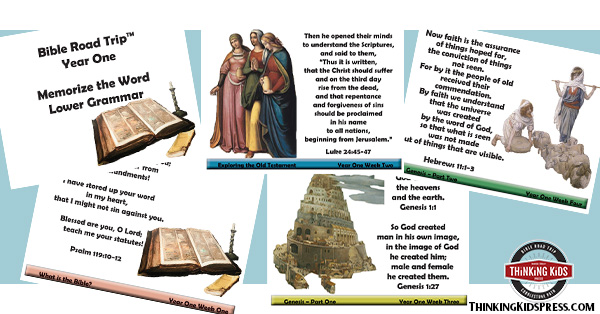
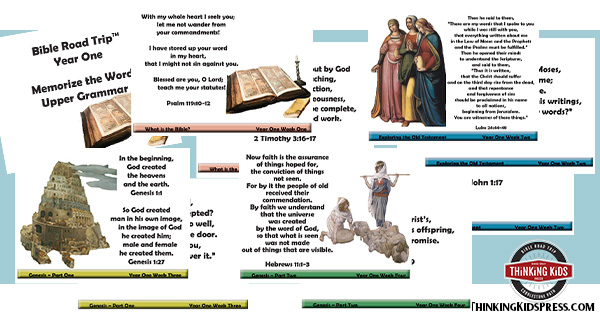
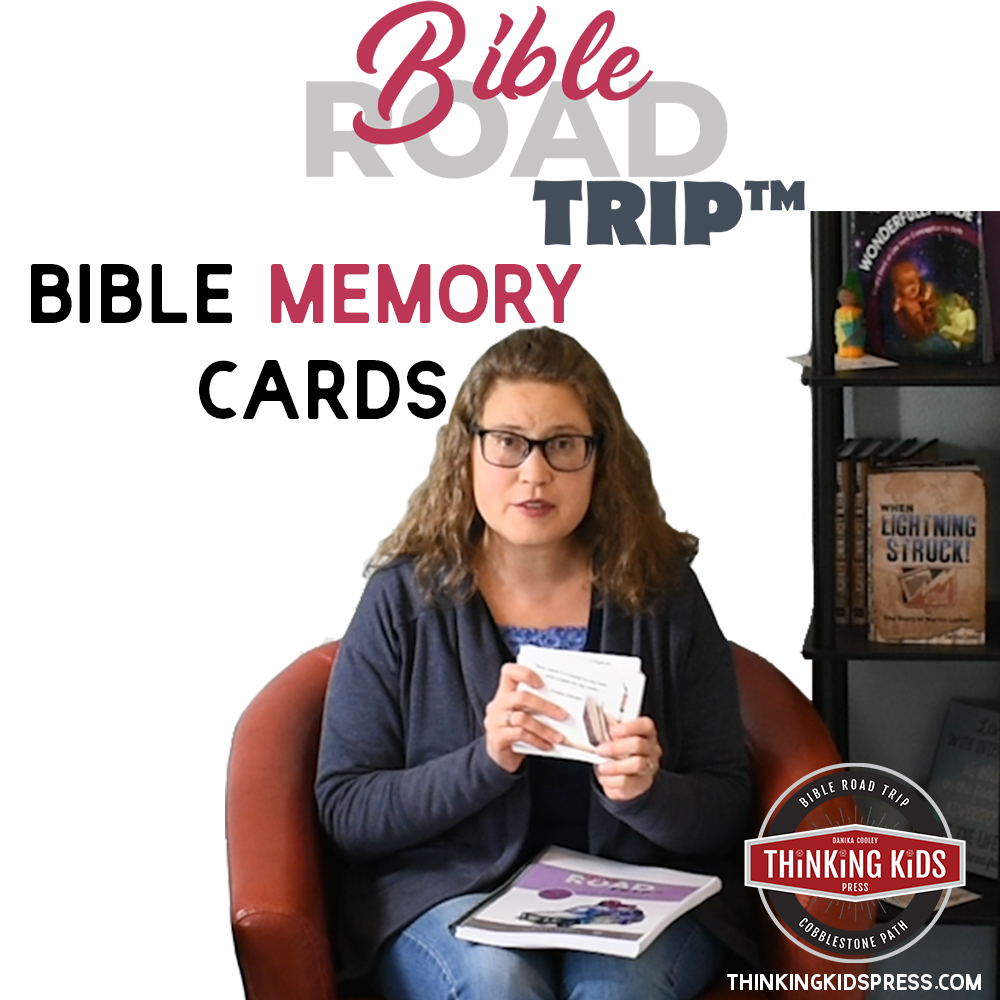
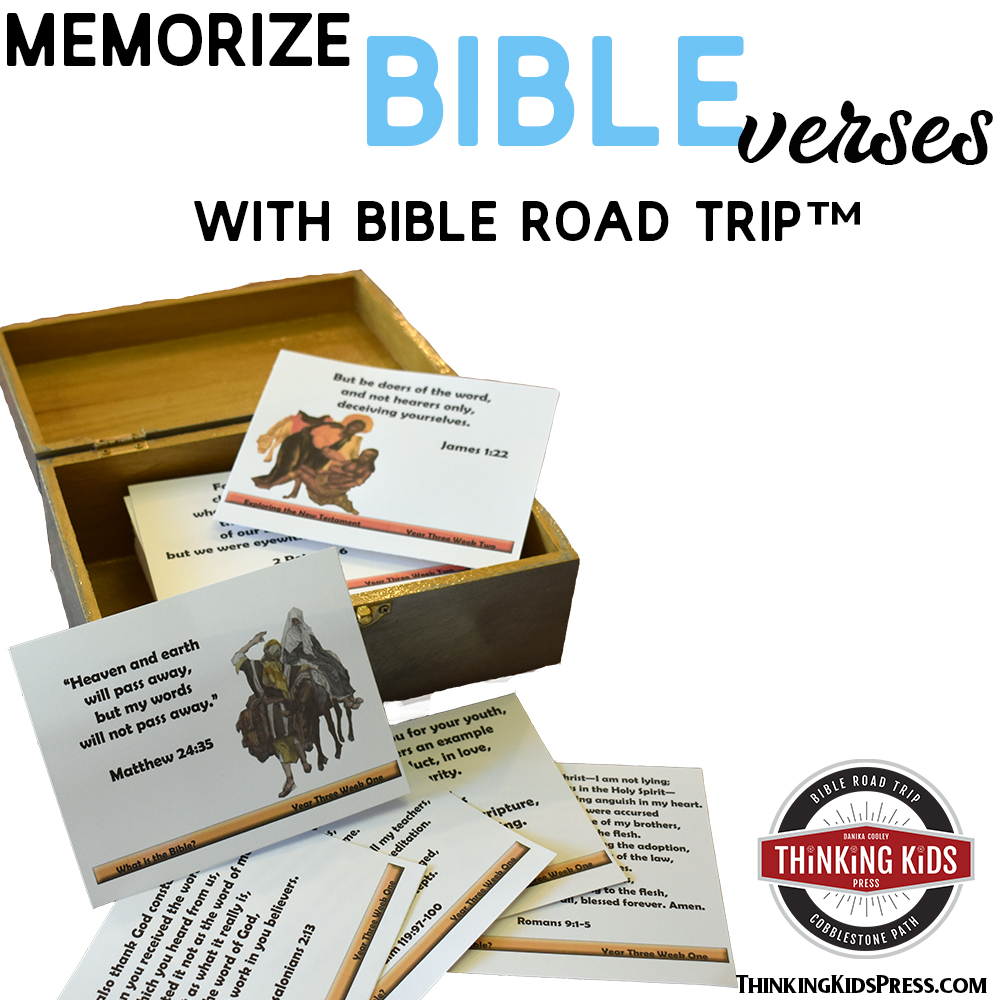
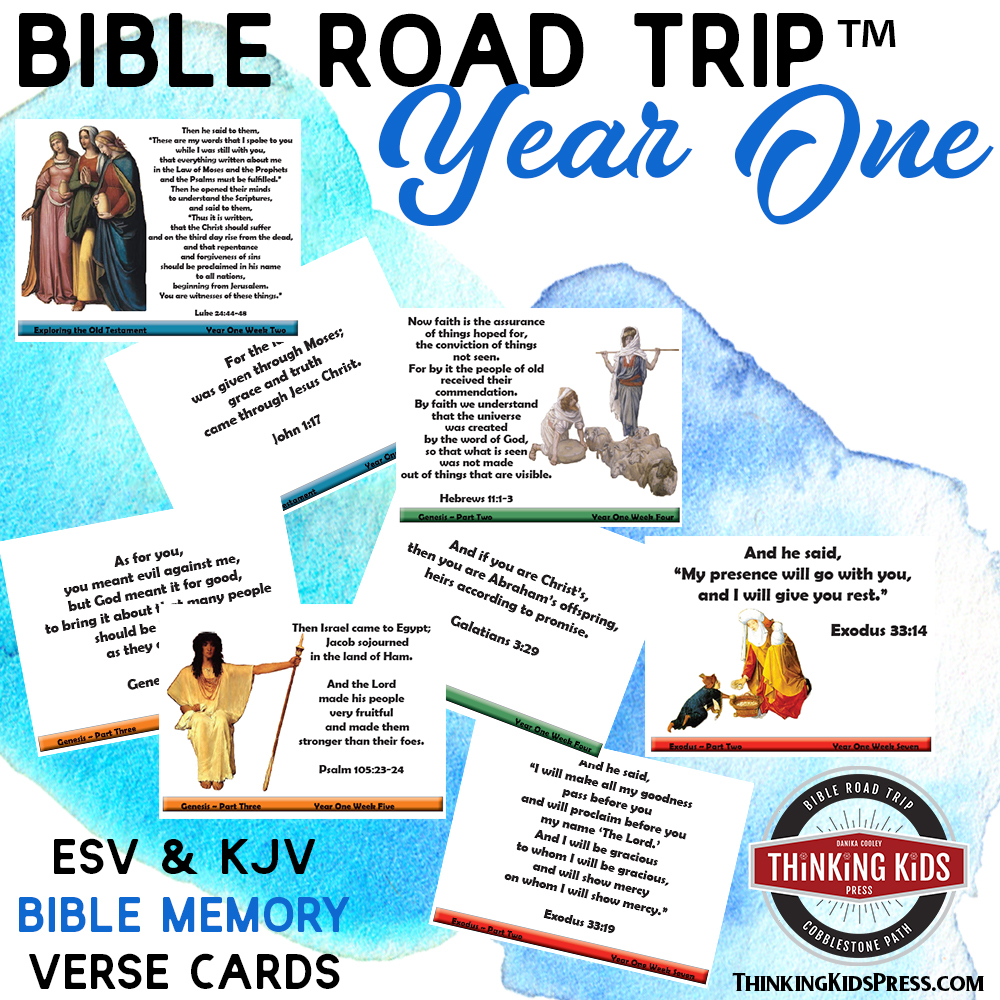
Bible Road Trip™ Bible memory verse cards make this task simple for you as a parent, and fun for your children. With beautiful artwork, and lines of Scripture arranged in beats, your kids can easily memorize God’s Word, one line at a time.
- Lower Grammar students will usually memorize one verse each week. (See the first four weeks of the Year One memory cards in the top graphic.)
- Upper Grammar students will usually memorize two or three passages each week. (See the first four weeks of the Year One memory cards in the bottom graphic.)
Notes on memorization:
- Upper Grammar students often have been through the Lower Grammar level. Some of the memorization will be review, and they will be building on prior knowledge. If, however, students struggle with memorization, start with just one verse each week.
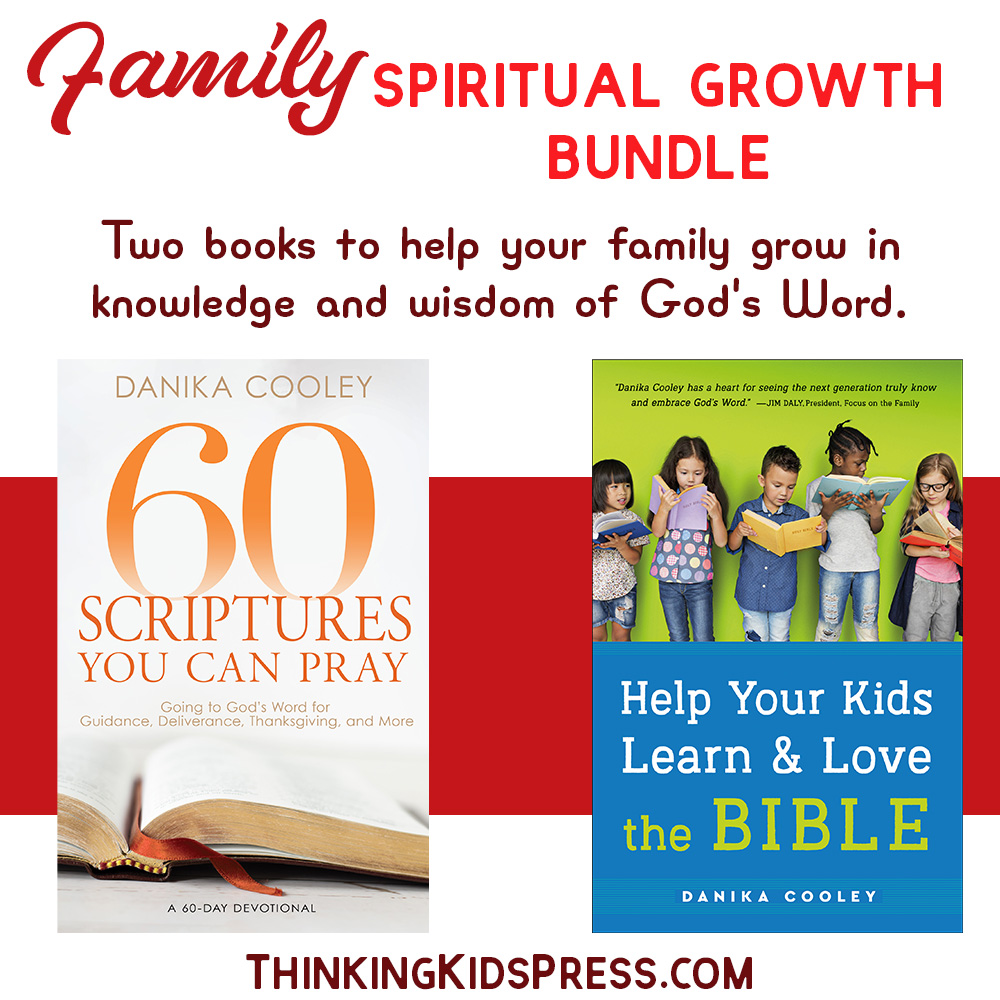
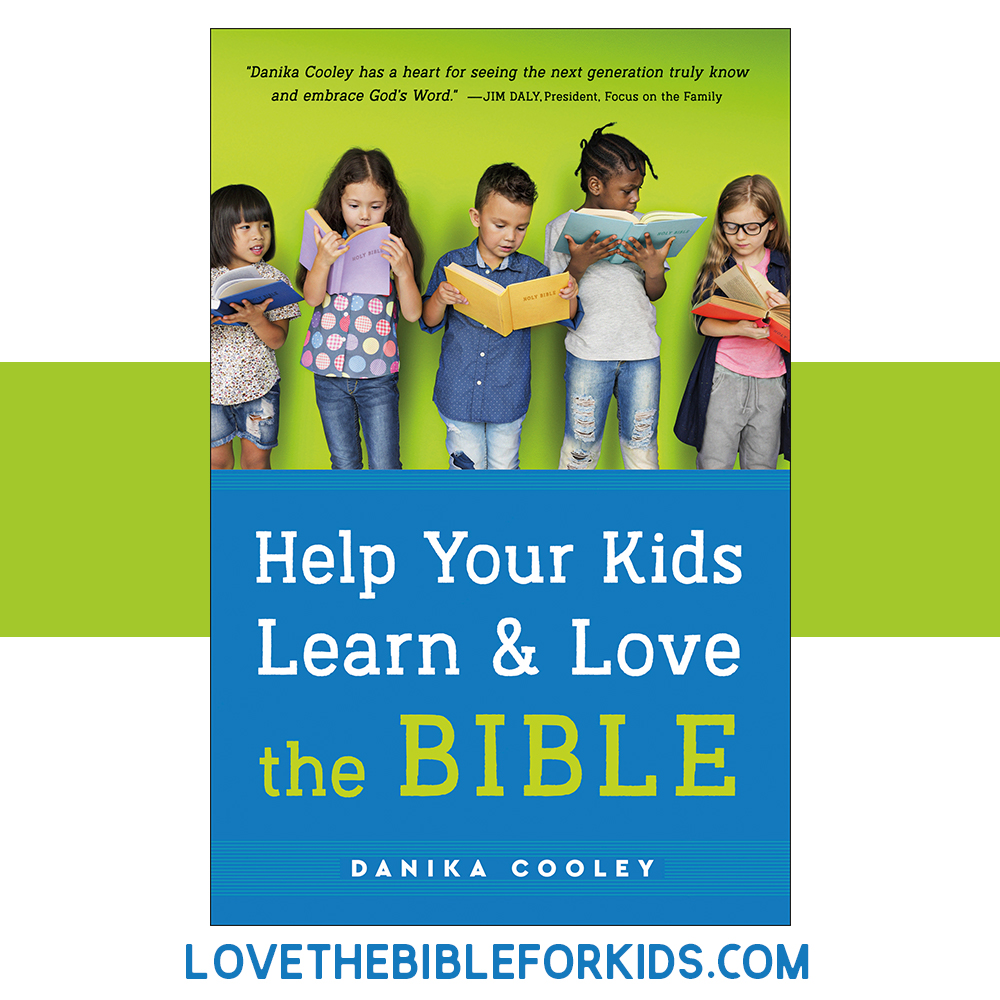
- As they practice memorizing, your children can add additional weekly verses. You will find a chapter on memorization tips and strategies, aimed at helping your children based on their learning style, in Help Your Kids Learn and Love the Bible.
Take a closer look at the Bible Road Trip™ Memory Cards:
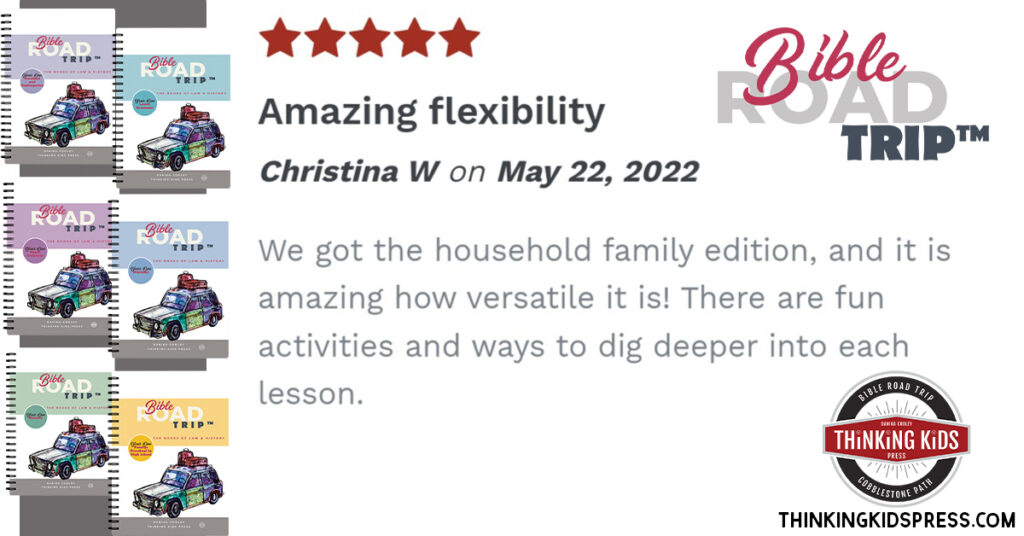
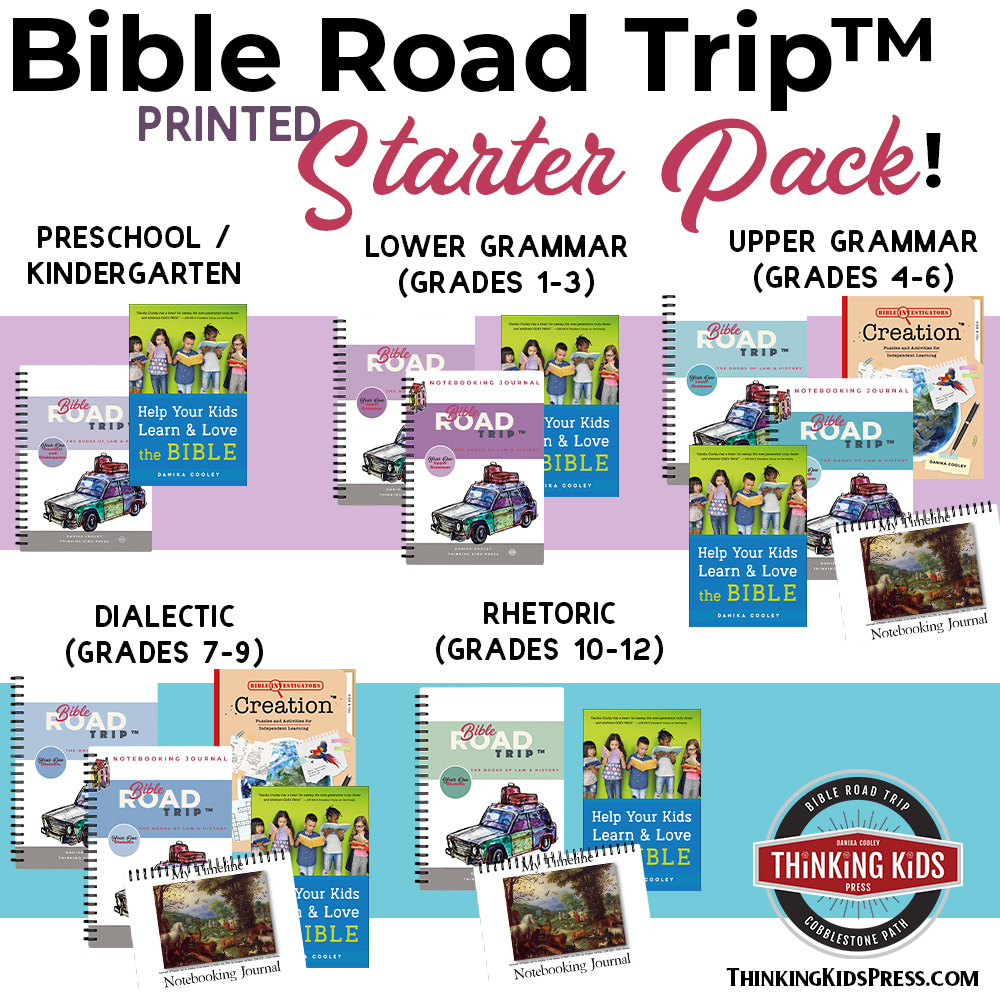
Purchase Bible Road Trip™ Year One | Lower Grammar (grades 1-3) and Upper Grammar (grades 4-6)
Want to start teaching your elementary aged students the Bible, right from the very beginning? There are three ways to purchase Year One:
- The printed starter pack
- In digital
- In print
The Bible memory verse cards are digital–just print them on cardstock and cut them apart! (Choose ESV or KJV in the pull down menu.)
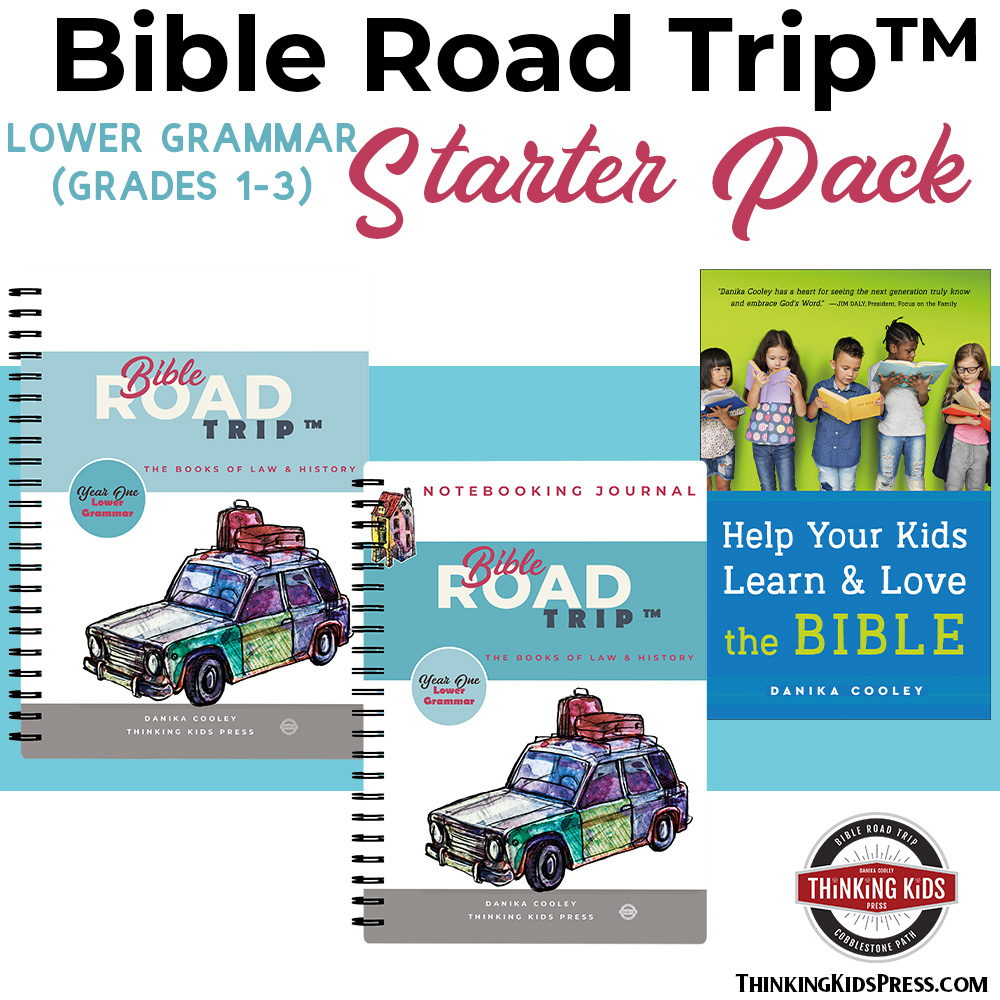
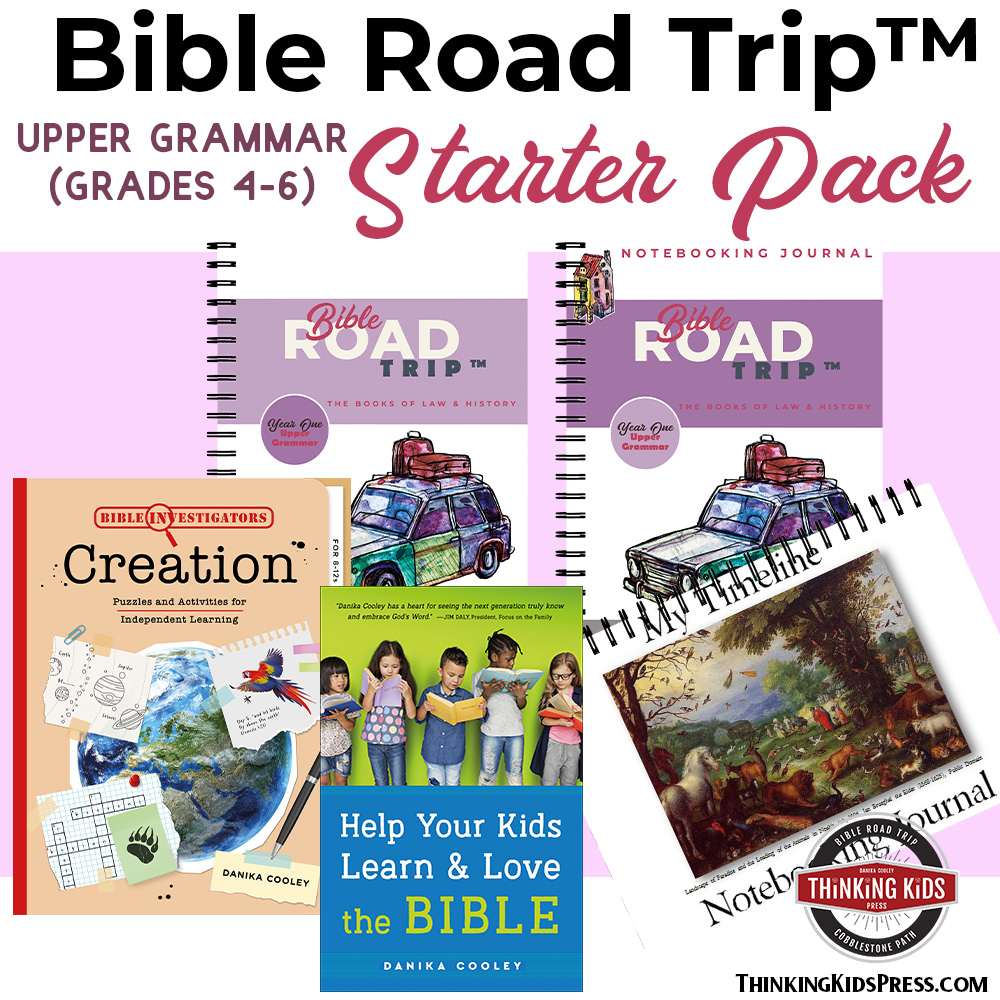
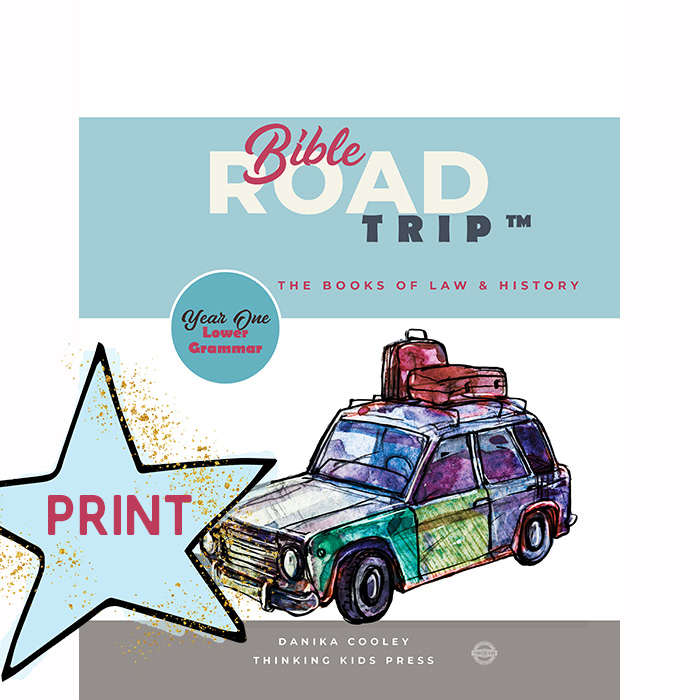
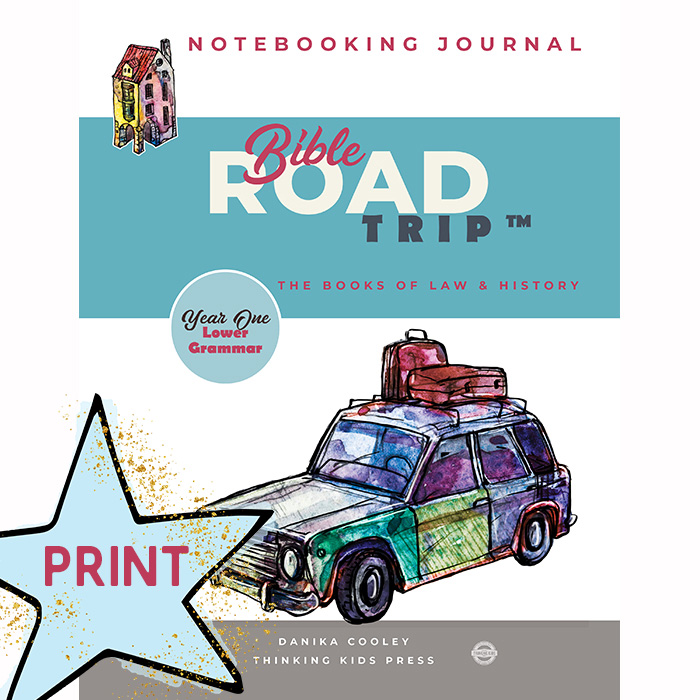
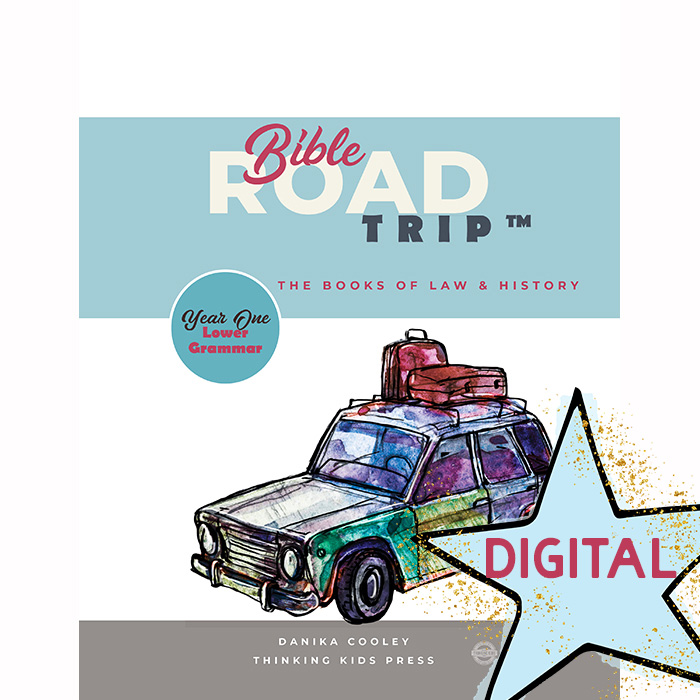
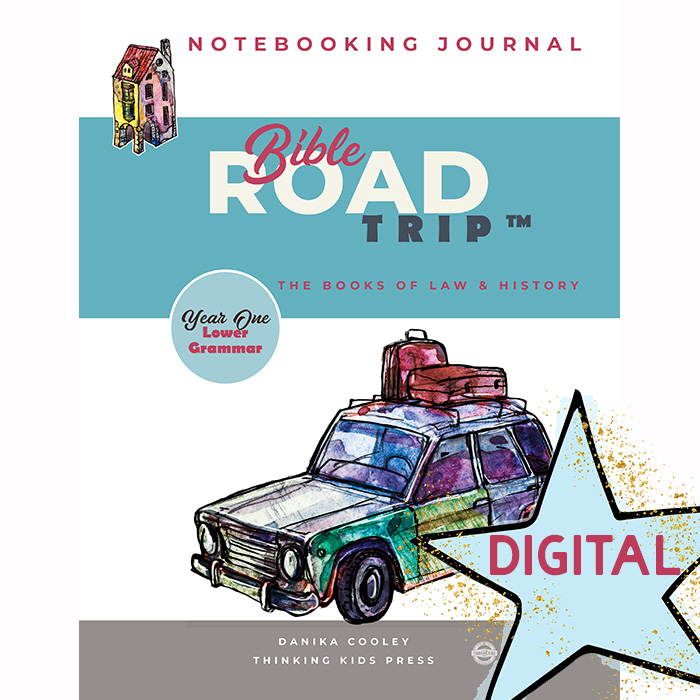
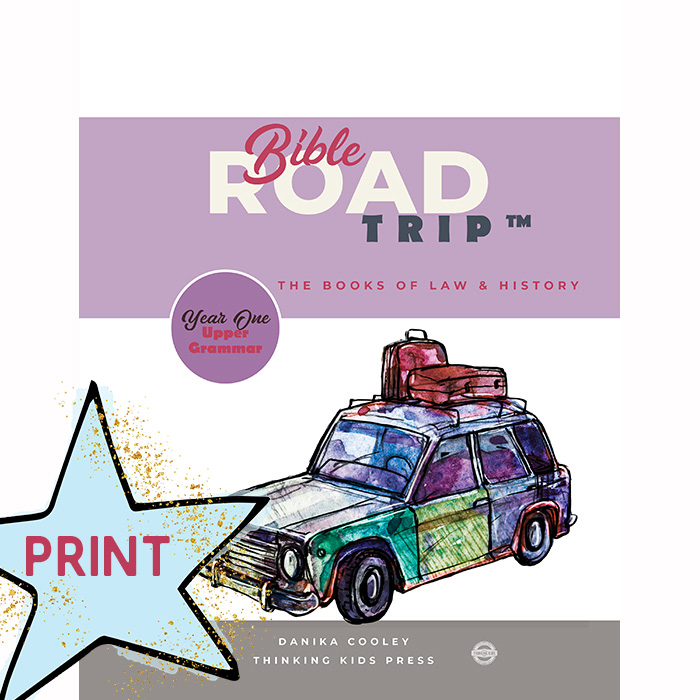
You can get all five levels of the curriculum in the Family curriculum. Find Year One below. (For Years Two and Three, choose the Family level in the pull down menu.)


You can also start with Year Two (the Books of Poetry and Prophecy) or Year Three (the Books of the New Testament).
Find the recommended resources for Lower Grammar (grades 1-3) or Upper Grammar (grades 4-6) here.
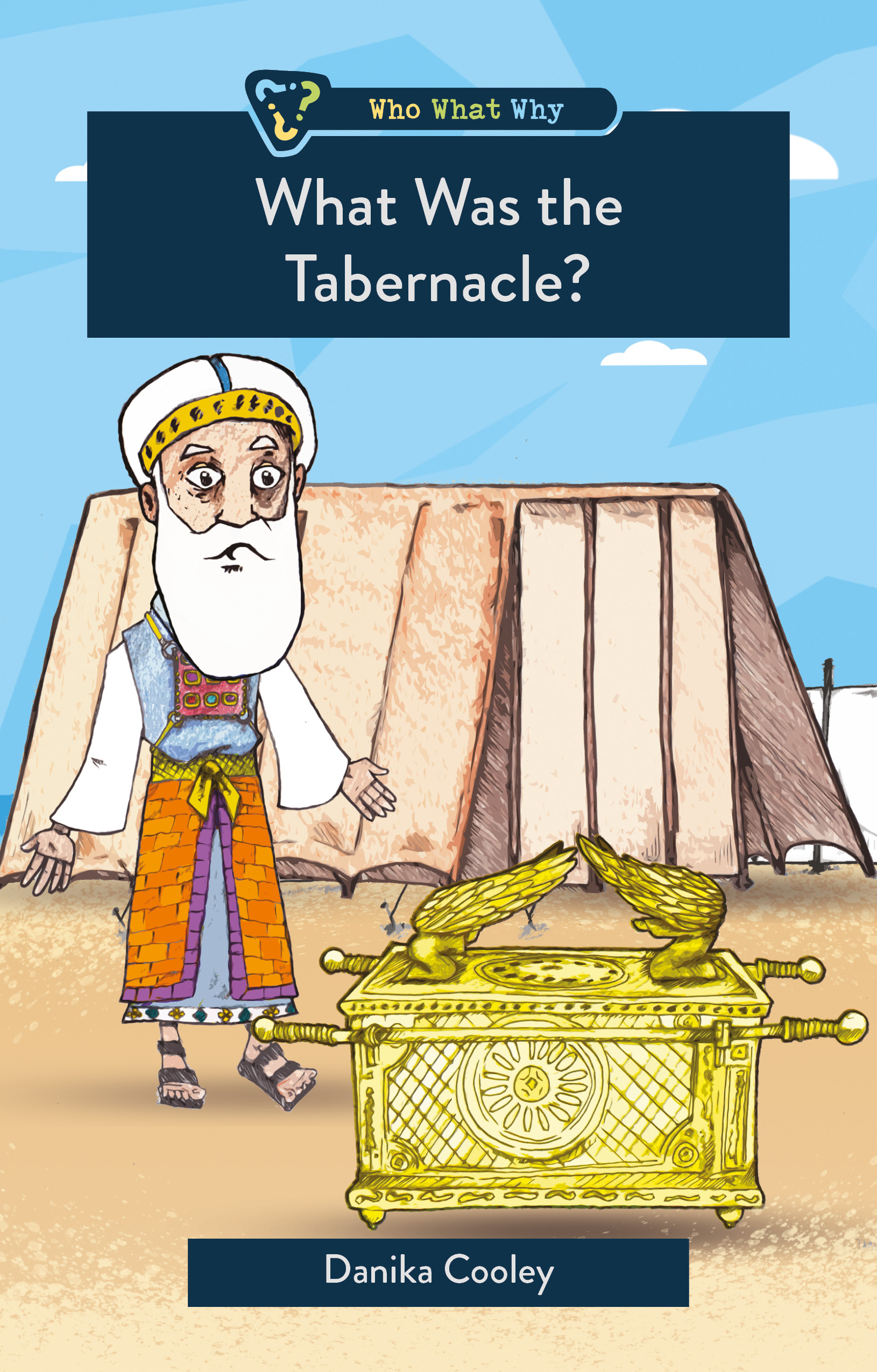
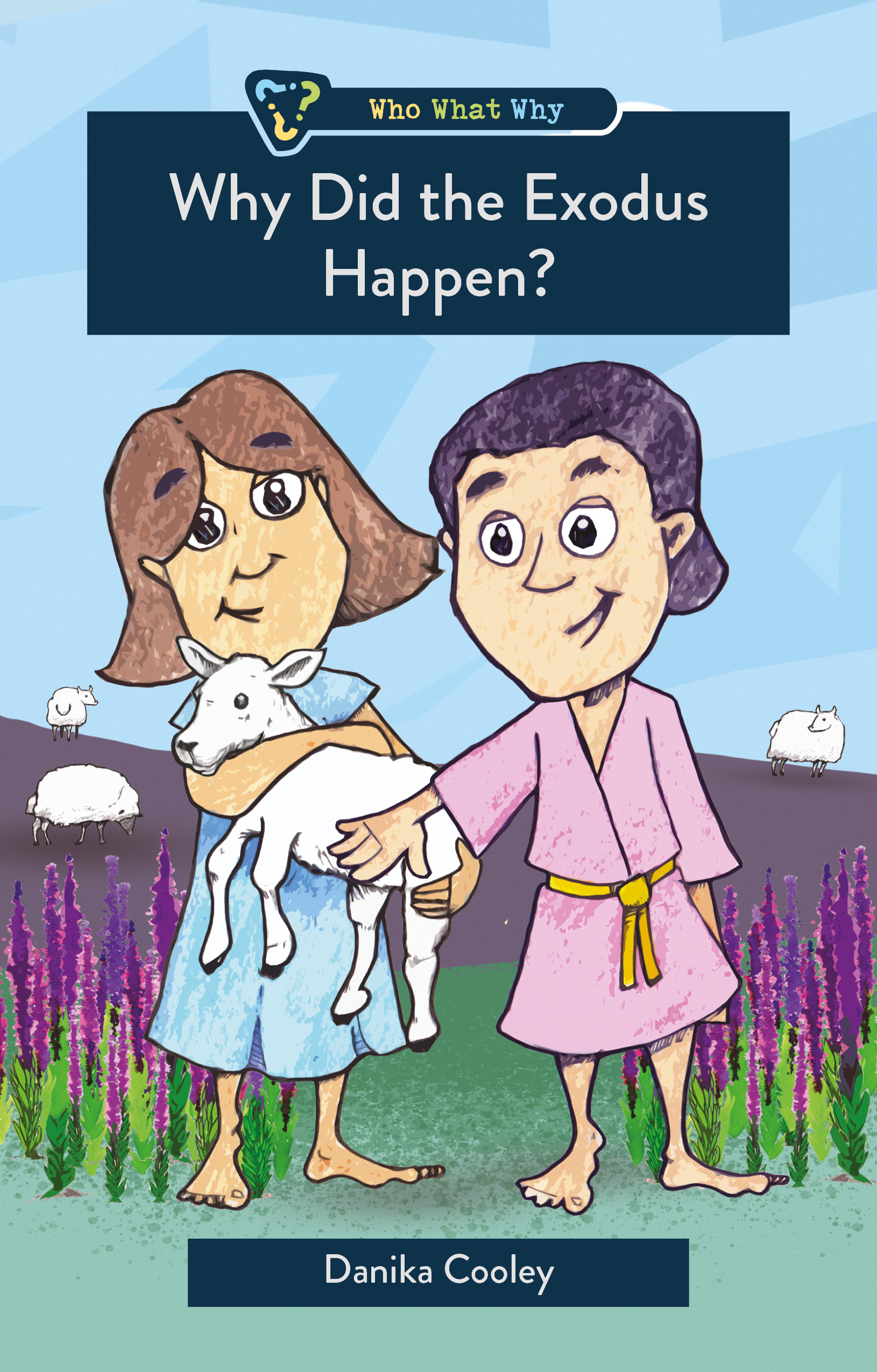
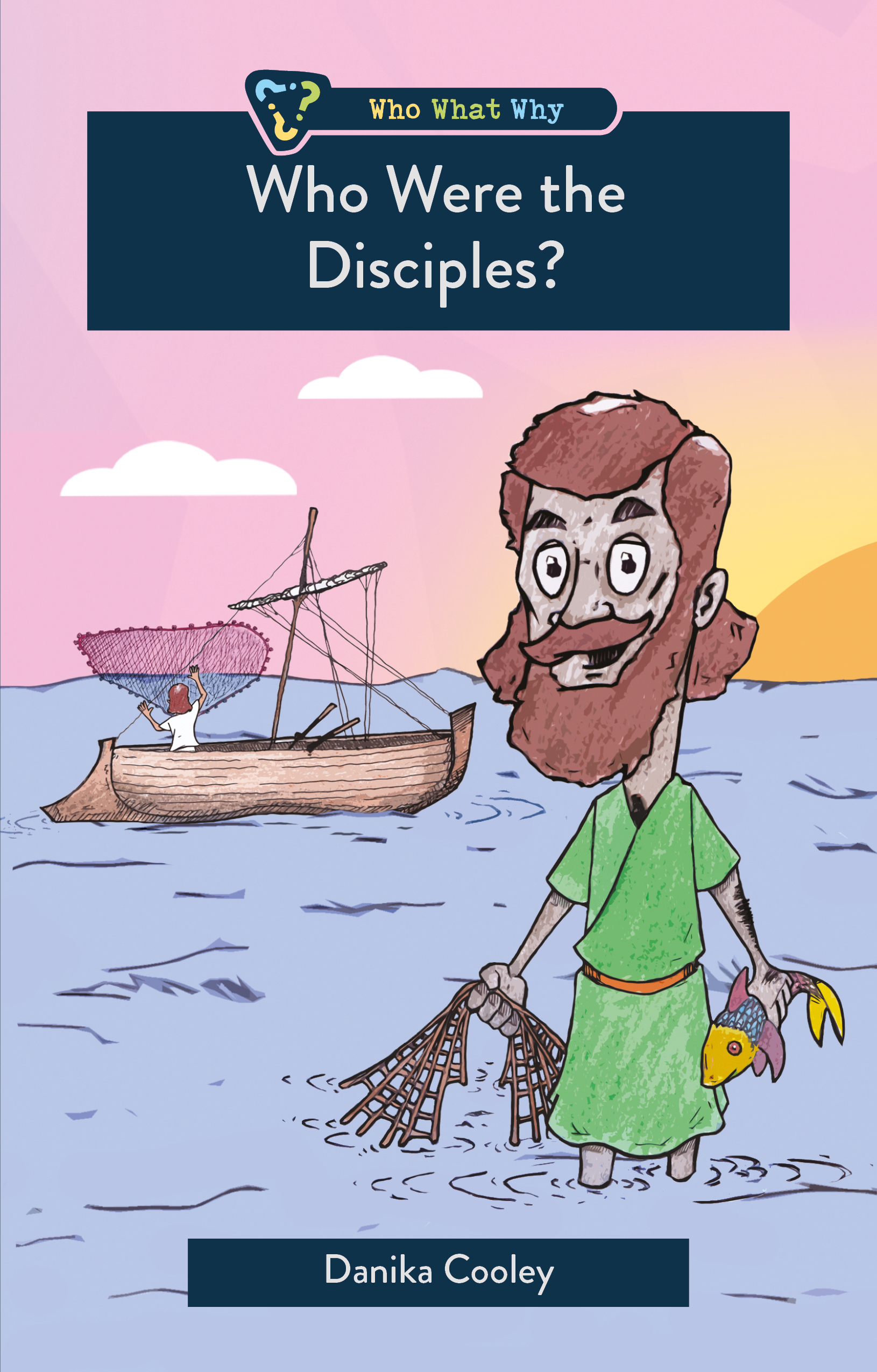
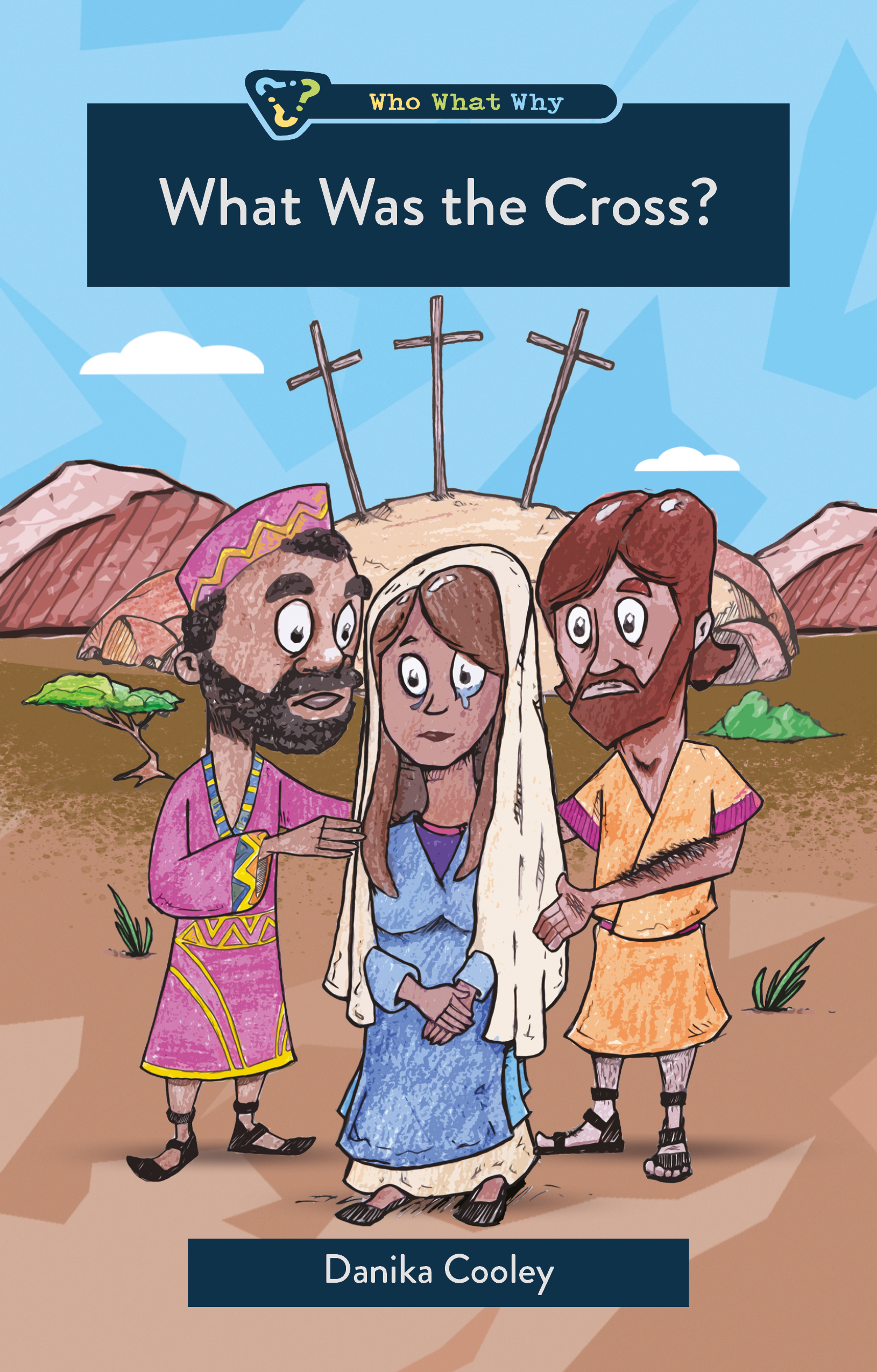
Books Make Great Gifts!
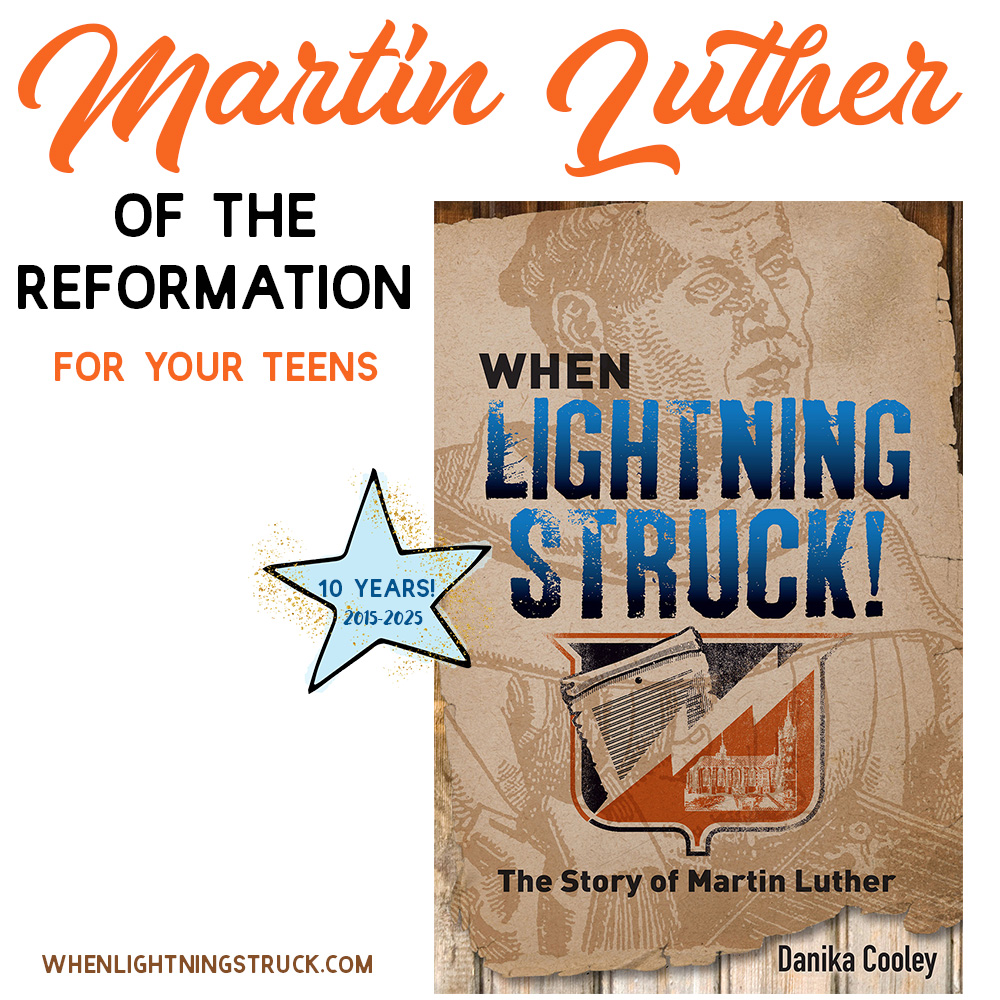
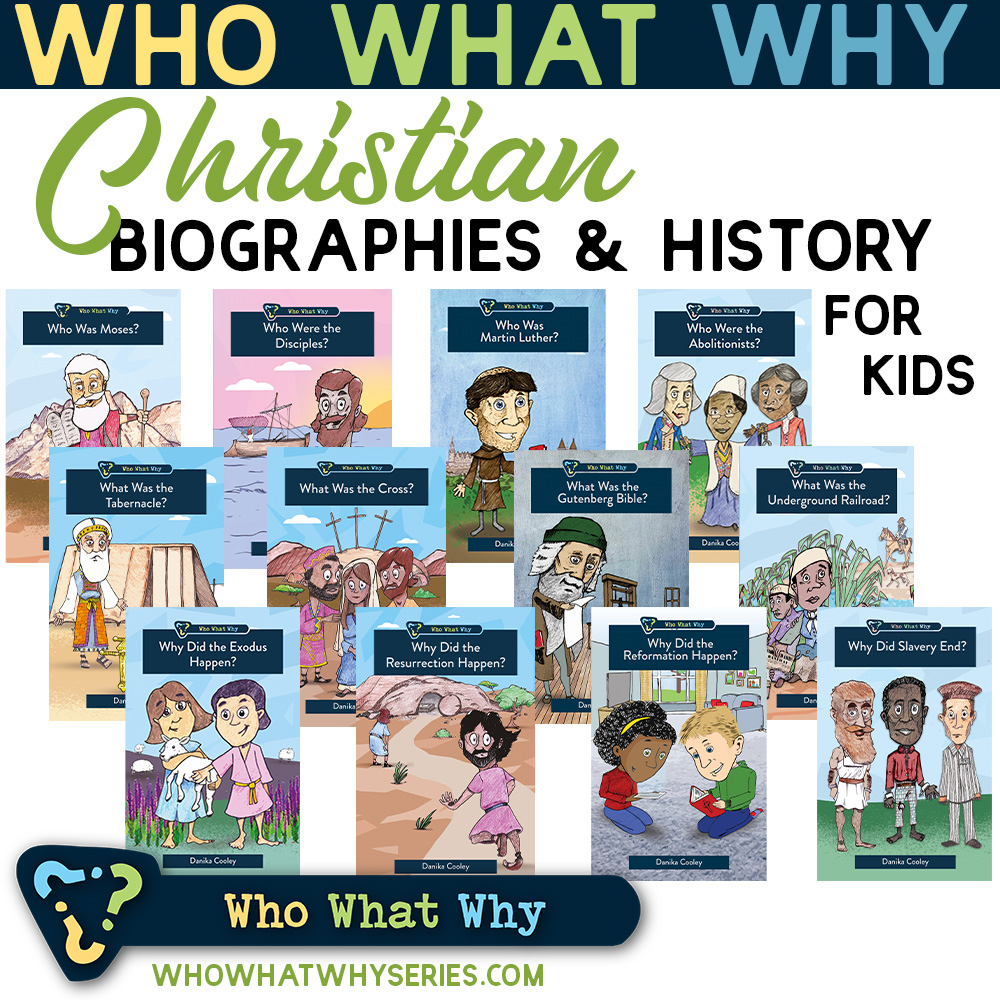
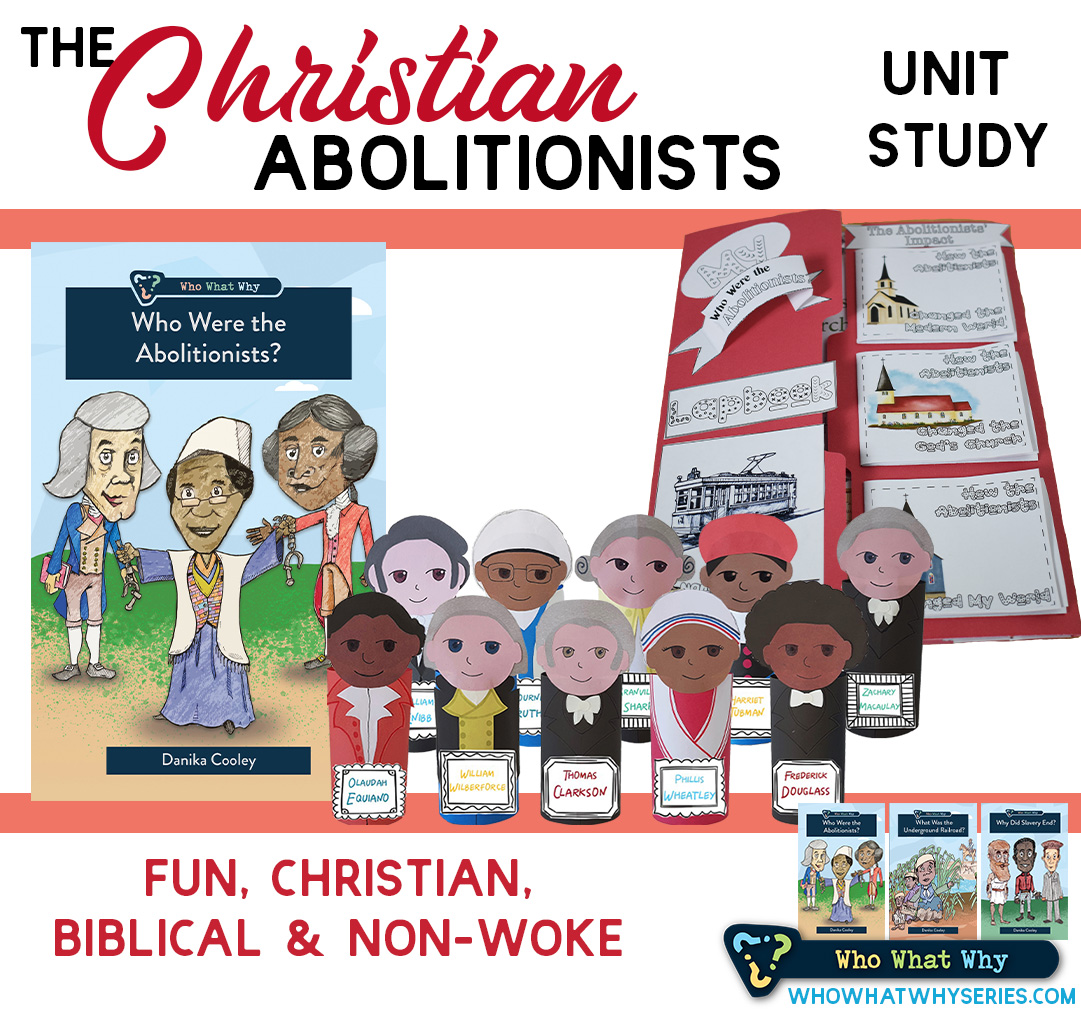
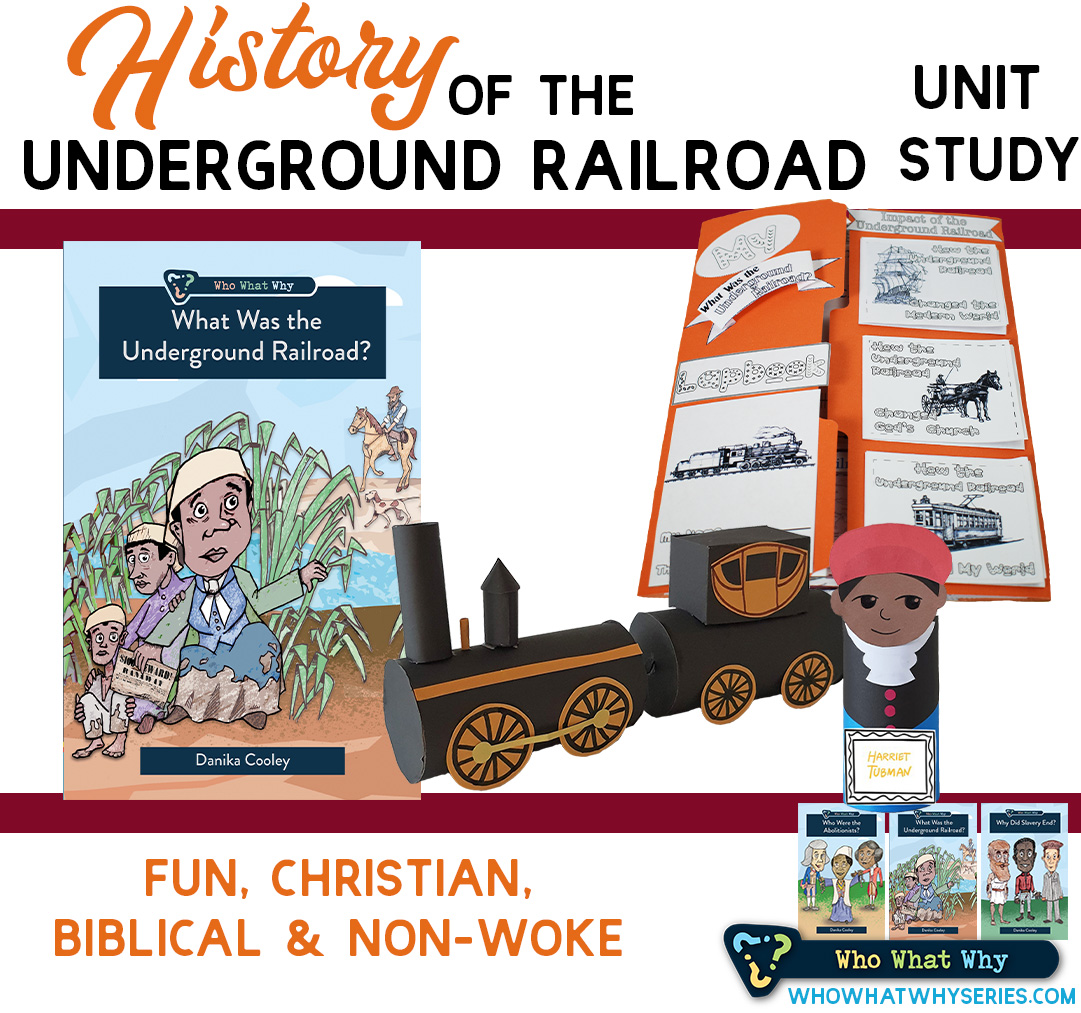
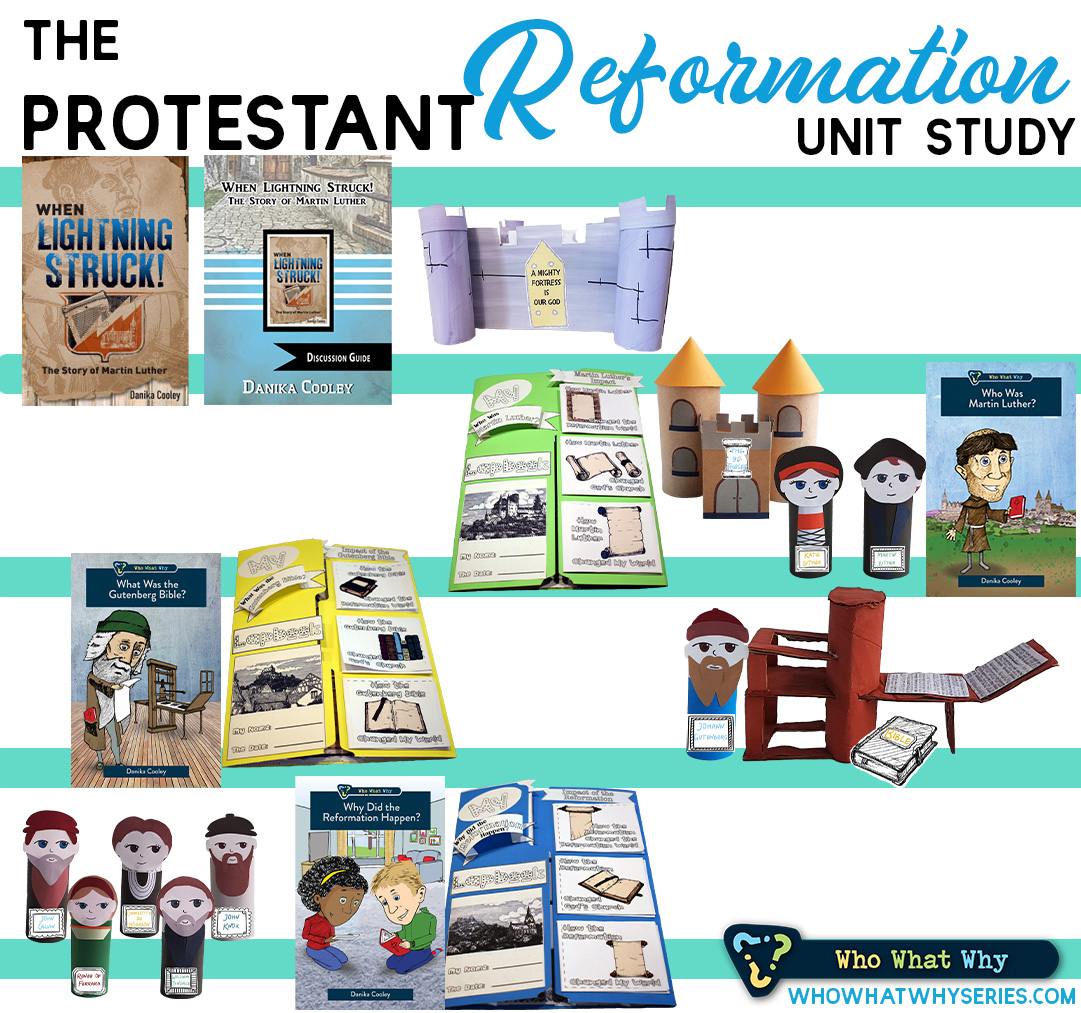
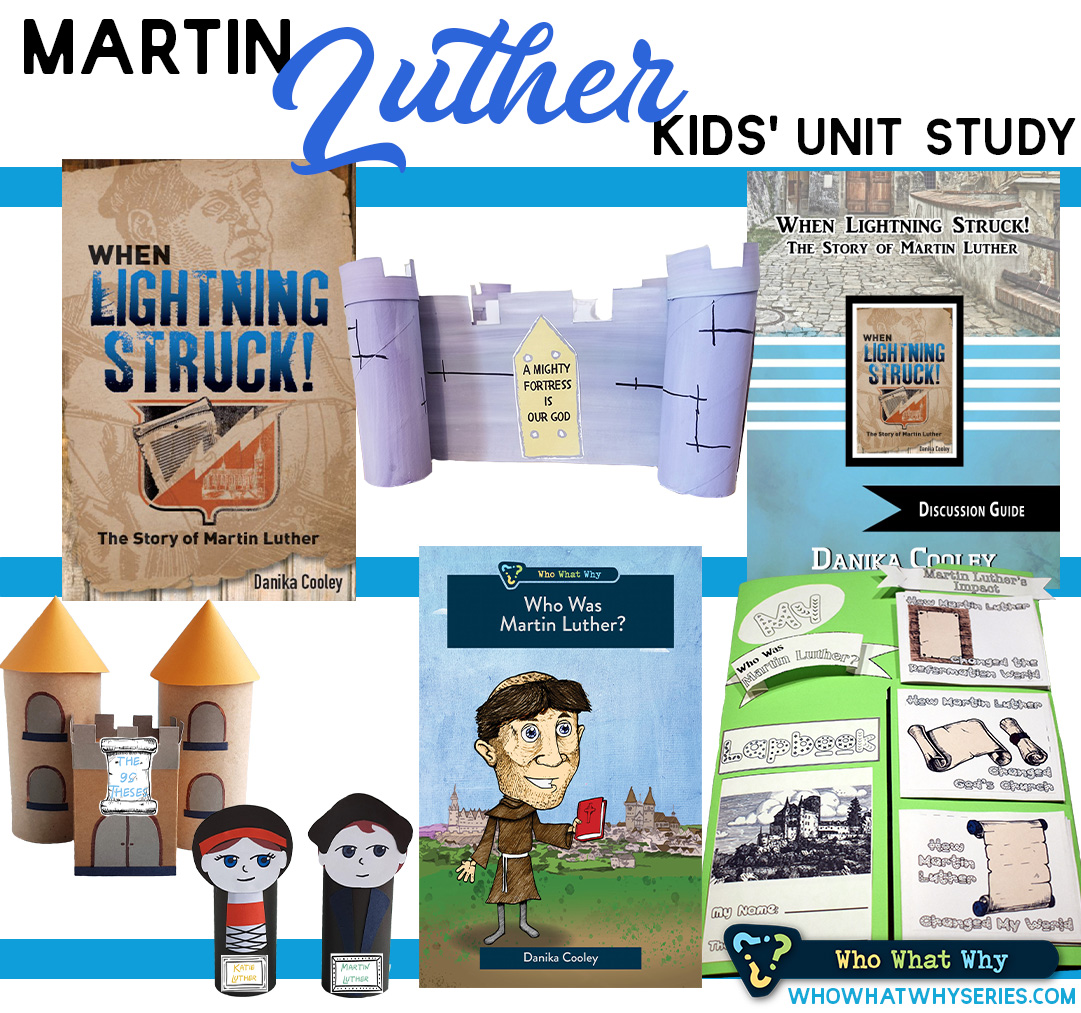
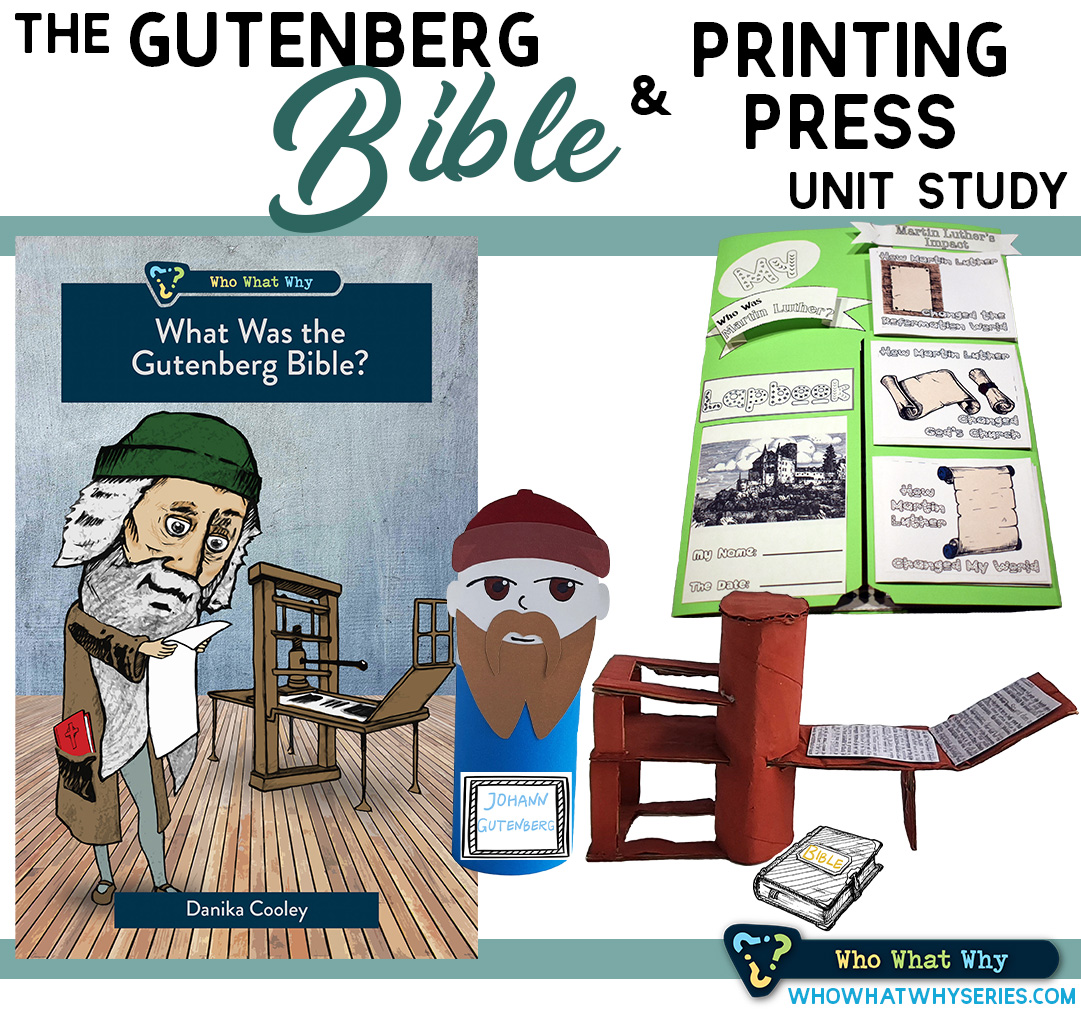
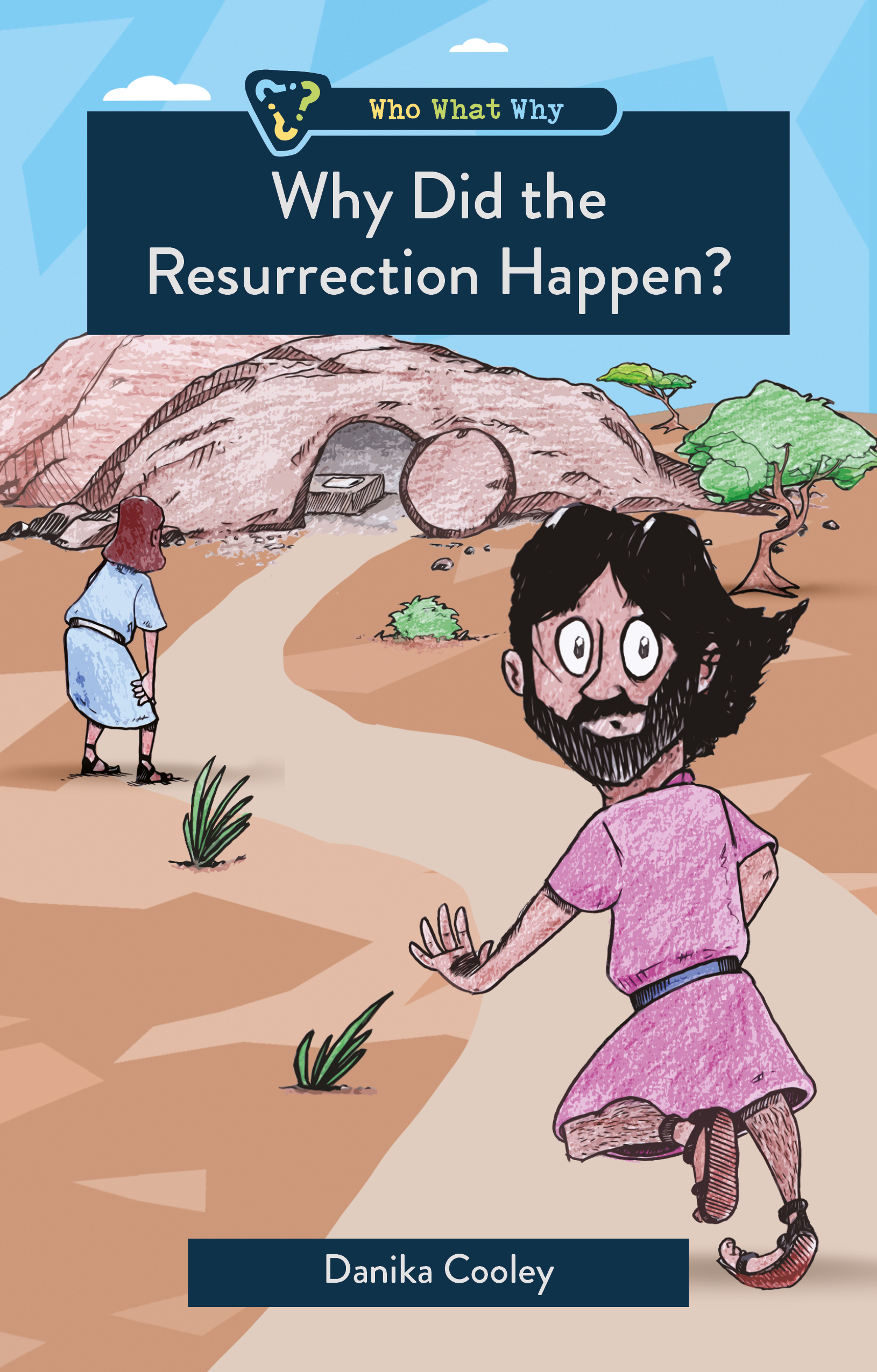
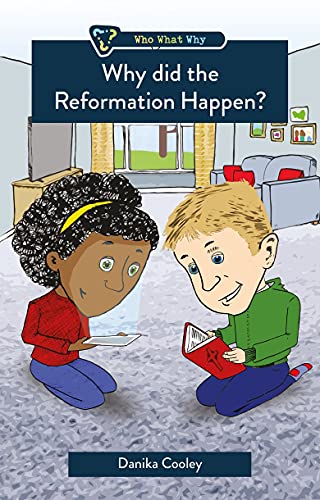
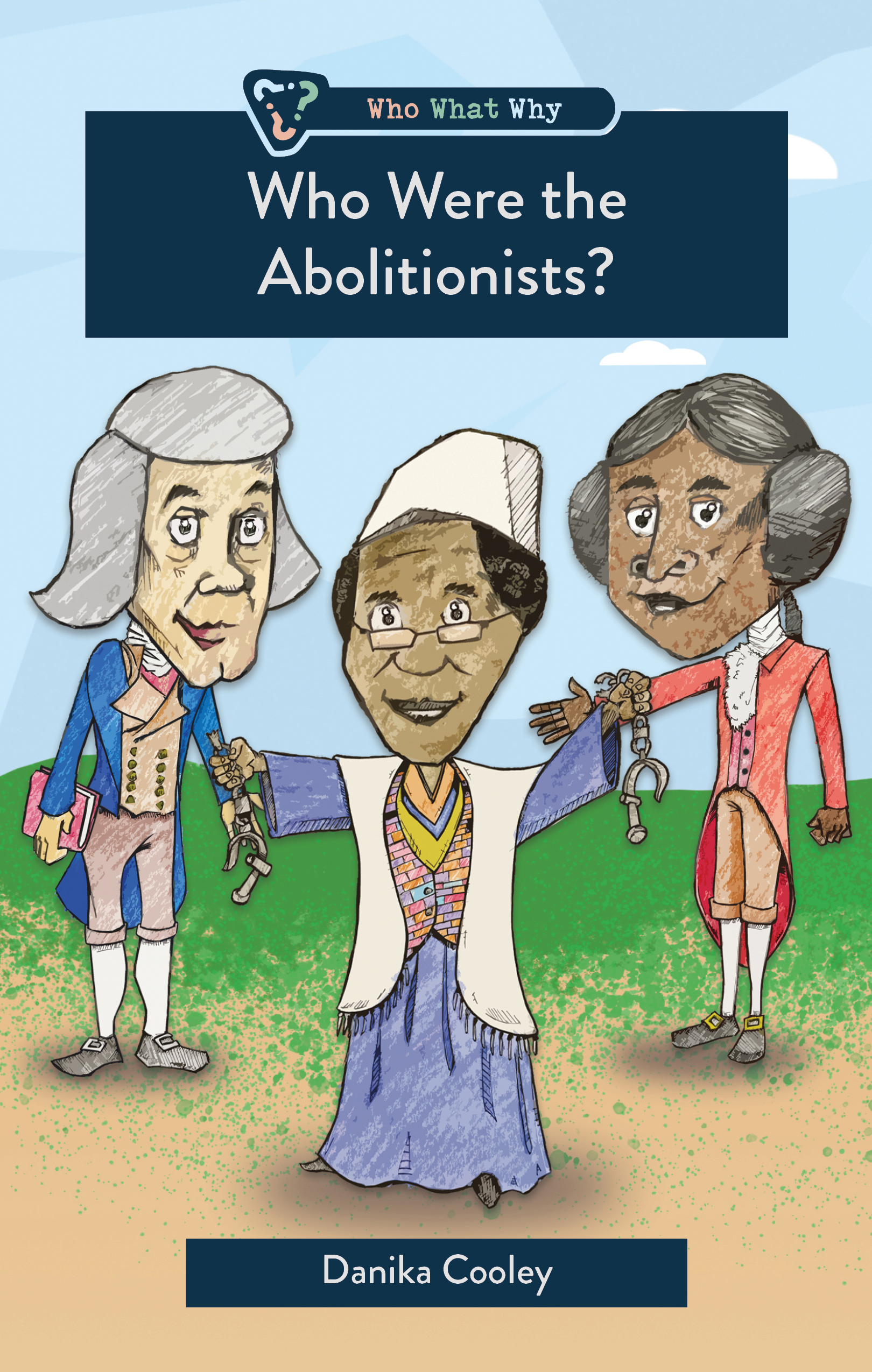
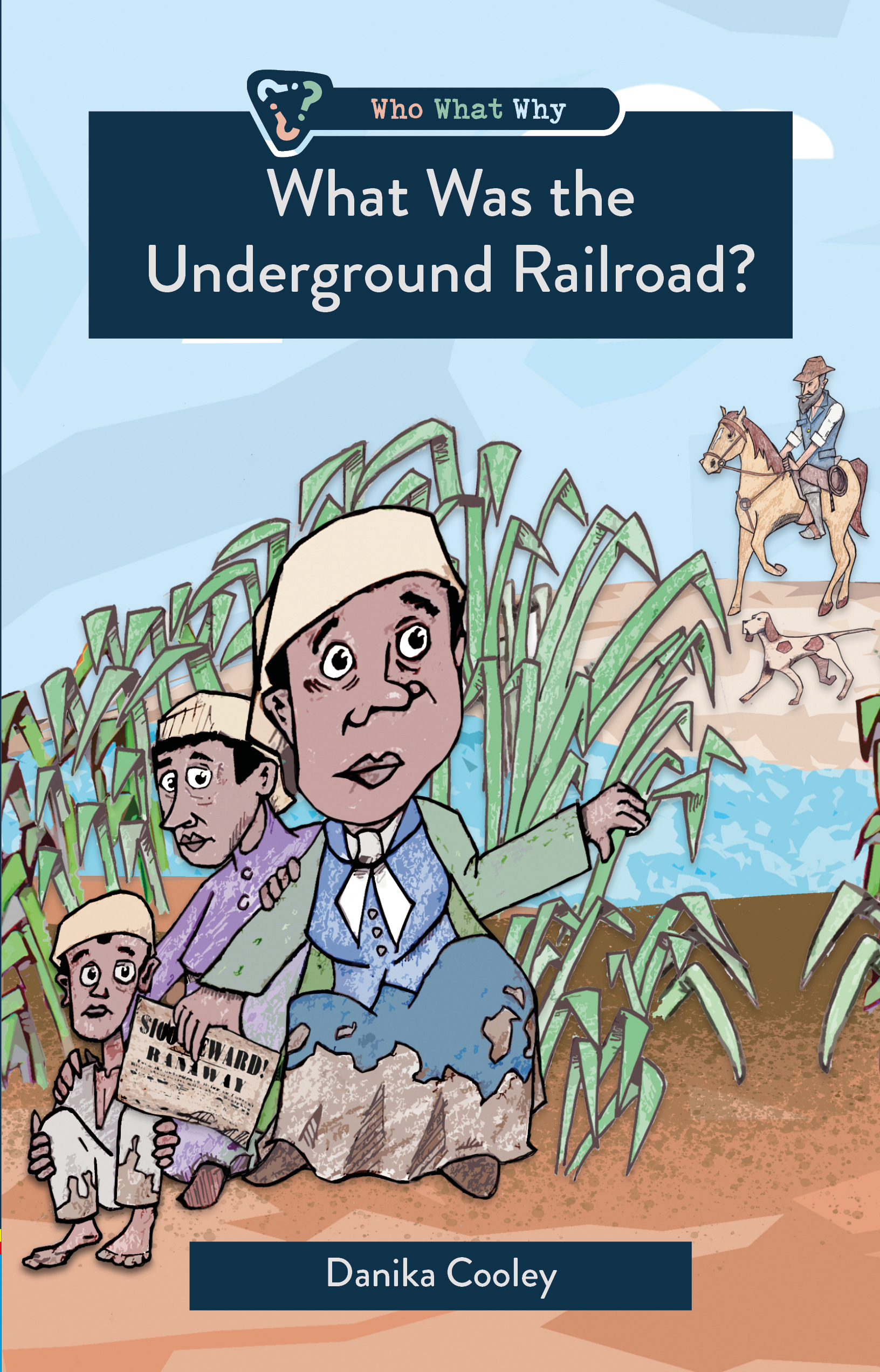
Teach the kids about the Bible and Christian history…
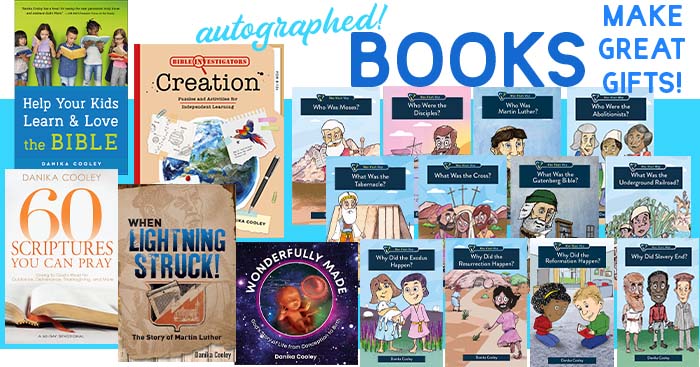
…with fun books they’ll love reading!
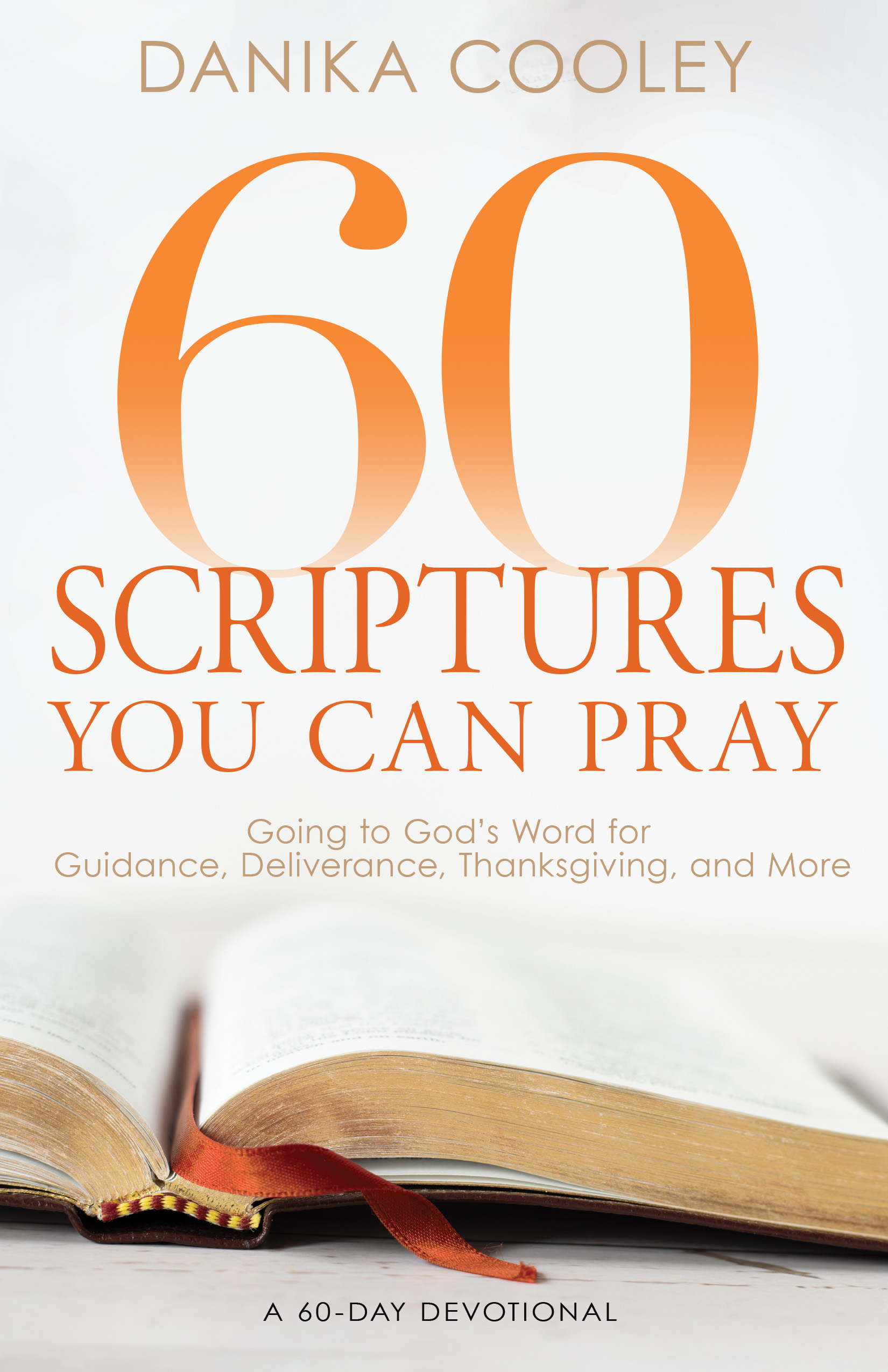
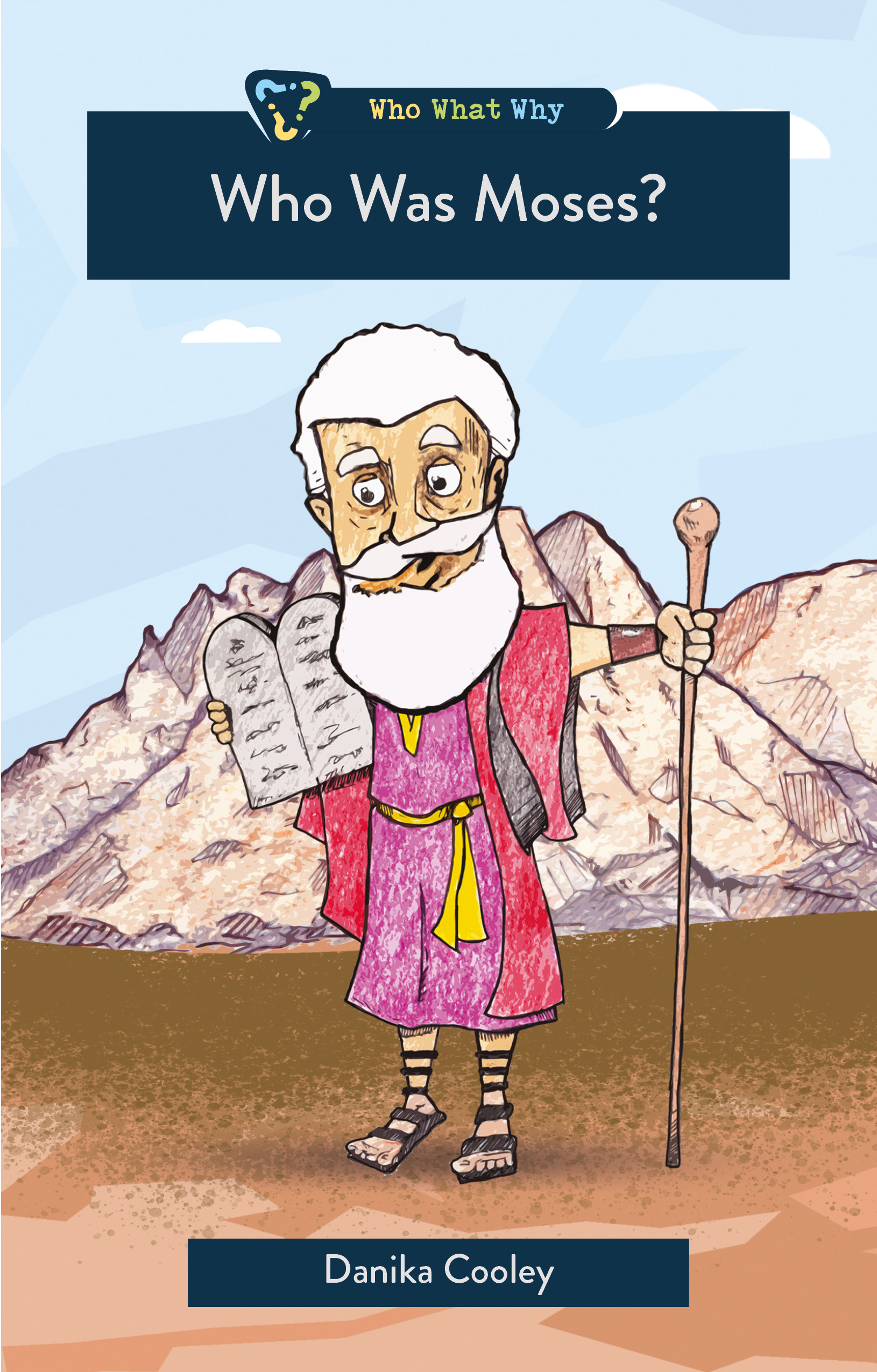
Introduce your children to engaging stories written in an engaging narrative they’ll want to read. As they learn more about God’s Word and gain real-life heroes, they will learn to apply Scripture to their own lives. And, give yourself the gift of a book that will help your kids learn and love the Bible.







Teach Your Kids the Bible with Bible Road Trip™
To help you get the most out of your studies, Bible Road Trip™ has an array of coordinating weekly activities:
- Researching the section of the Bible you’re studying
- Reading and discussing the Bible
- Memorizing Scripture
- Notebooking about your studies
- Praying for the nations
- Suggestions for further study
- Crafting about what you’ve learned
- For your older students: A project to share what they’ve learned
- Bible Road Trip™ also has some great tools you can use along with it, such as:
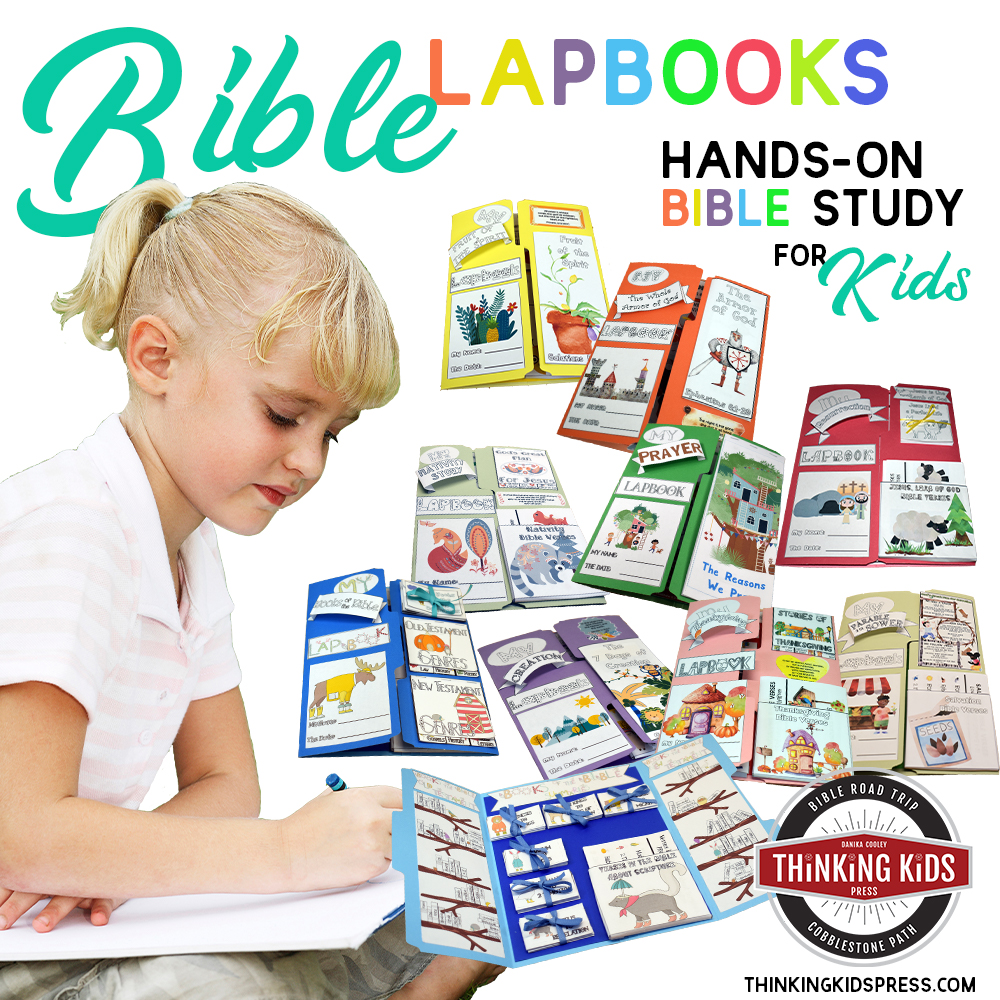
- Notebooking Journals for grades 1-9. Want a structured notebooking journal for high school? Don’t hesitate to use the Dialectic journal (grades 7-9).
- Bible Memory Card Sets for all five levels of study, preschool to high school. These are available in both ESV and KJV.

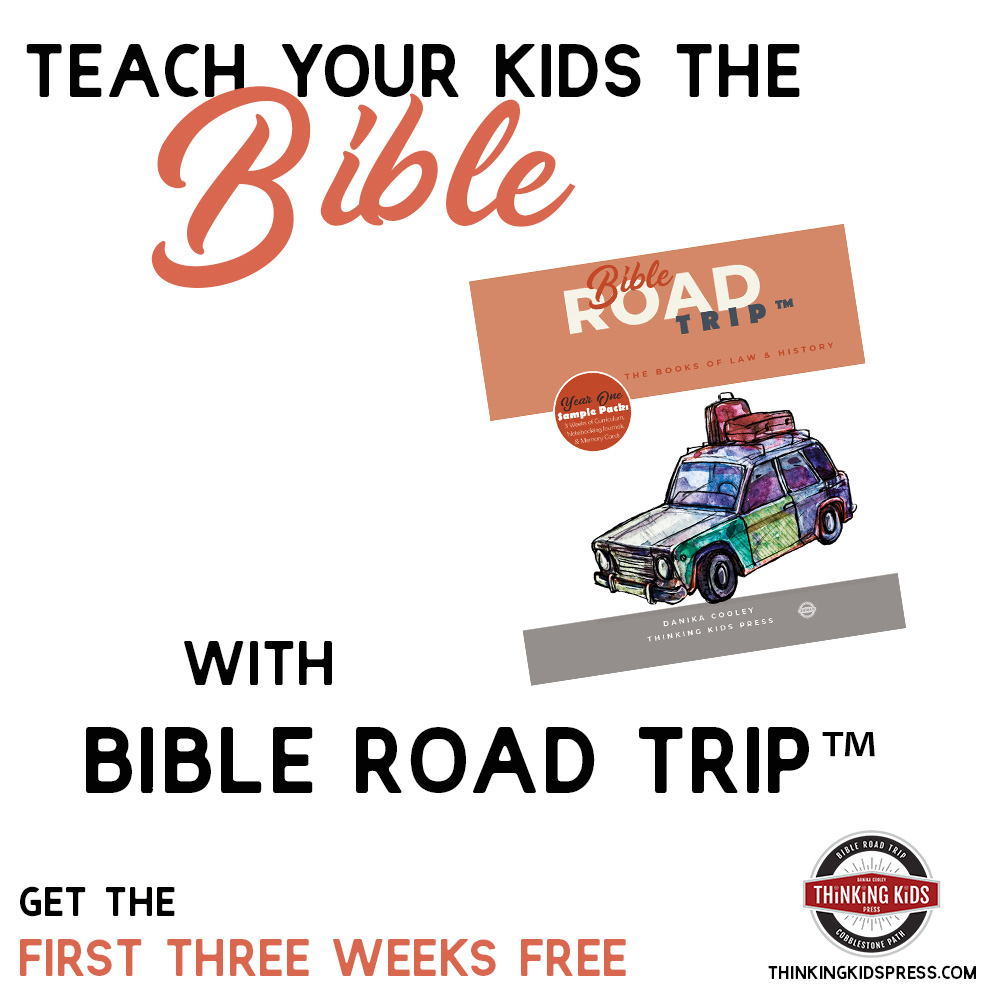
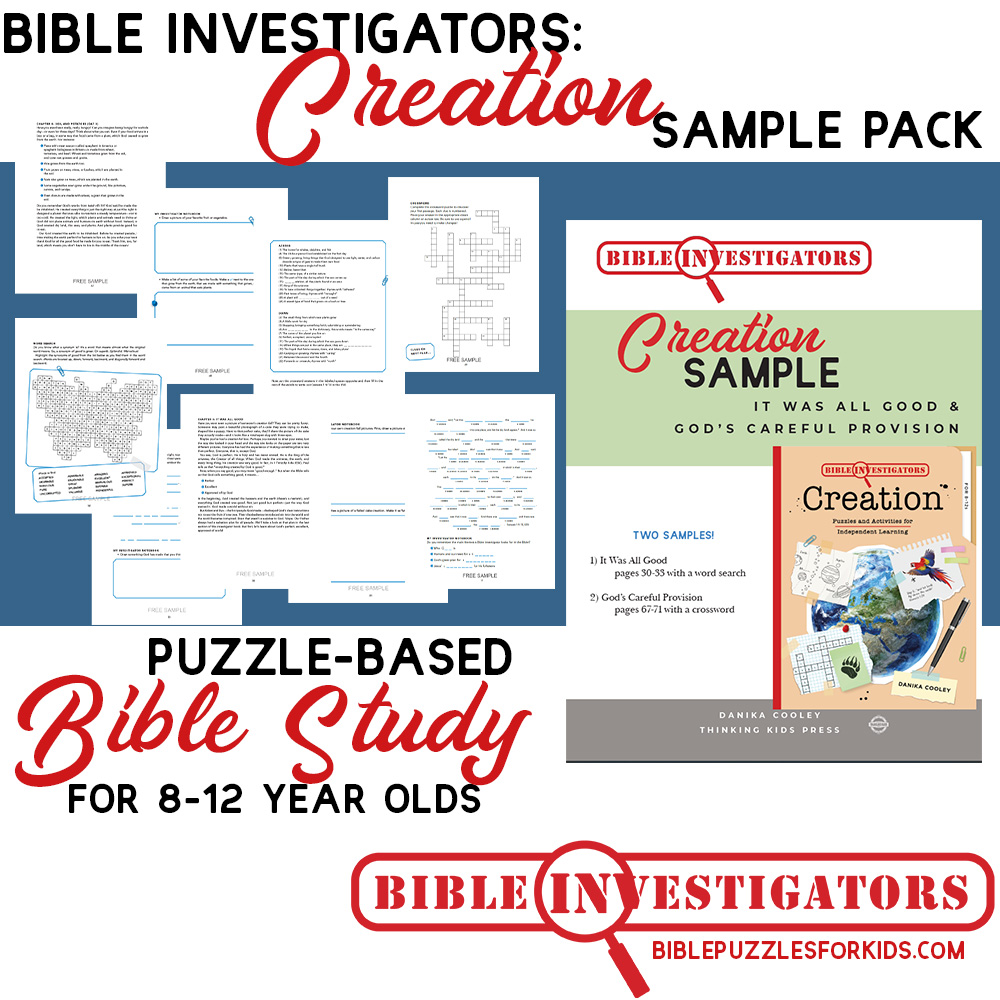
Grab your Bible Road Trip™ Year One Sample Pack. You’ll get:
- The Bible Road Trip™ Parent / Teacher Guide.
- The first three weeks of the curriculum for all five learning levels. Week Three is where we really dive into the Bible and begin to our systematic study. Week Three will give you a good feel for the rest of the curriculum.
- The first three weeks of the Bible Memory Card sets for all five levels, in ESV and KJV.
- The first three weeks of each of the three leveled Notebooking Journals.
Grab the Sample Pack for FREE:

Disciple your kids by taking your family through the Bible together in a meaningful way!
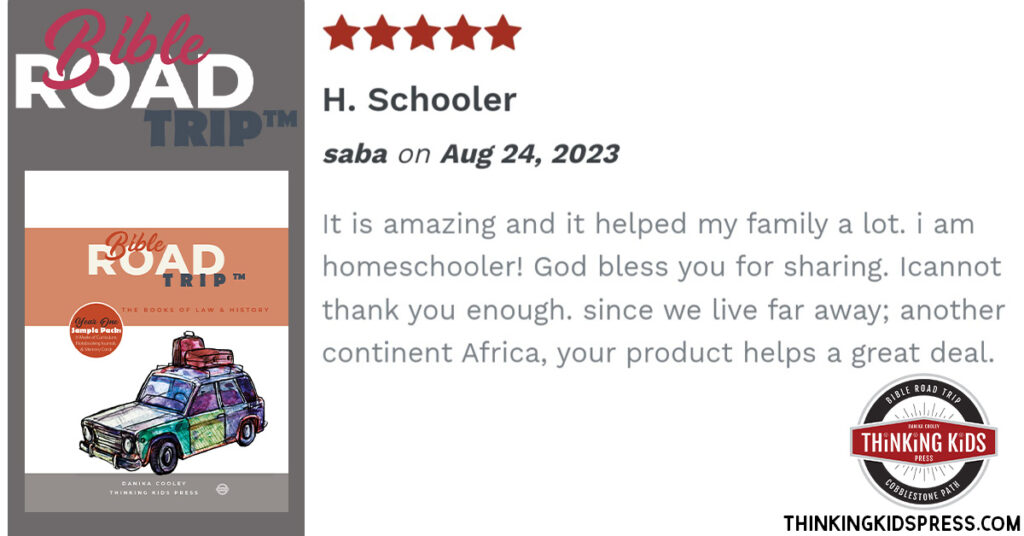

The 2024 Practical Homeschooling® Reader Awards™ were announced in the Fall 2024 issue of Practical Homeschooling® magazine.
The Reader Awards have been a regular feature in the magazine since 1998.
Thousands of homeschoolers rank the curriculum they have used, and the products with the highest satisfaction ratings win.
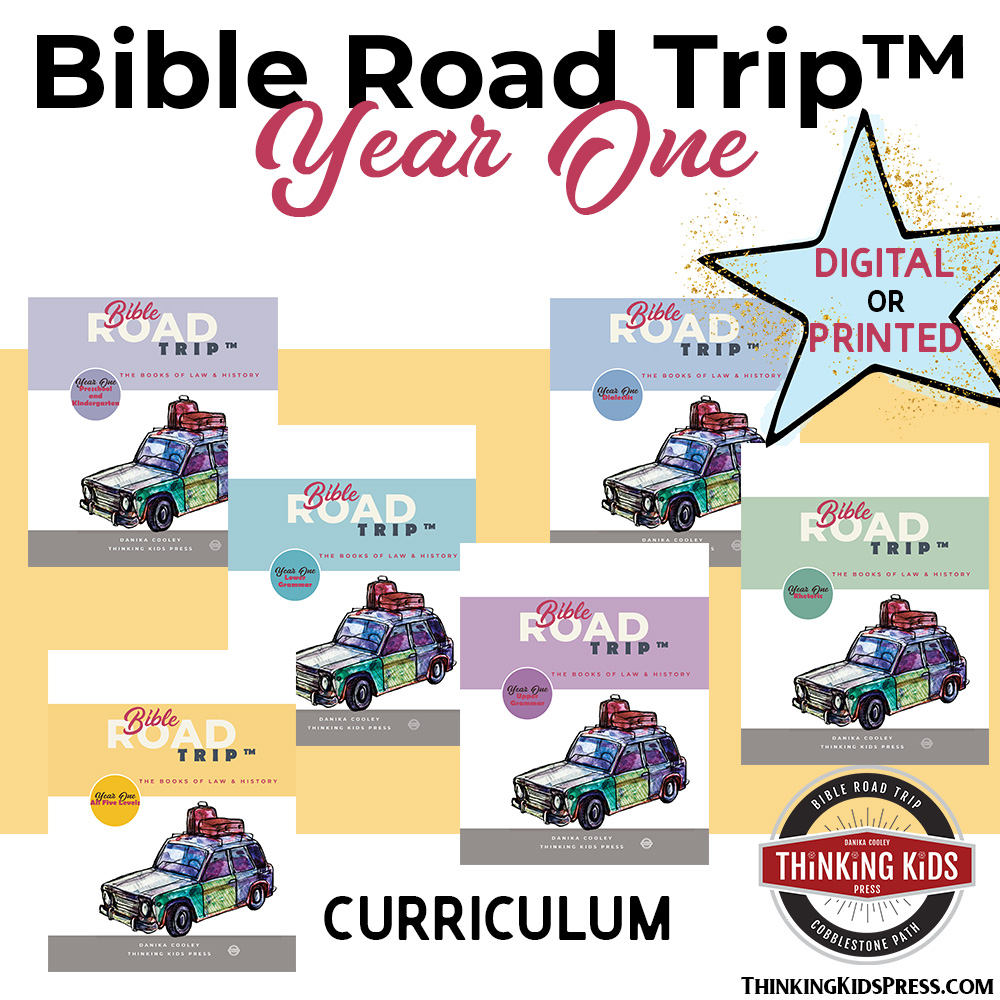
Bible Road Trip™ Curriculum
Take a look inside the Bible Road Trip™ curriculum! Let me show you around:
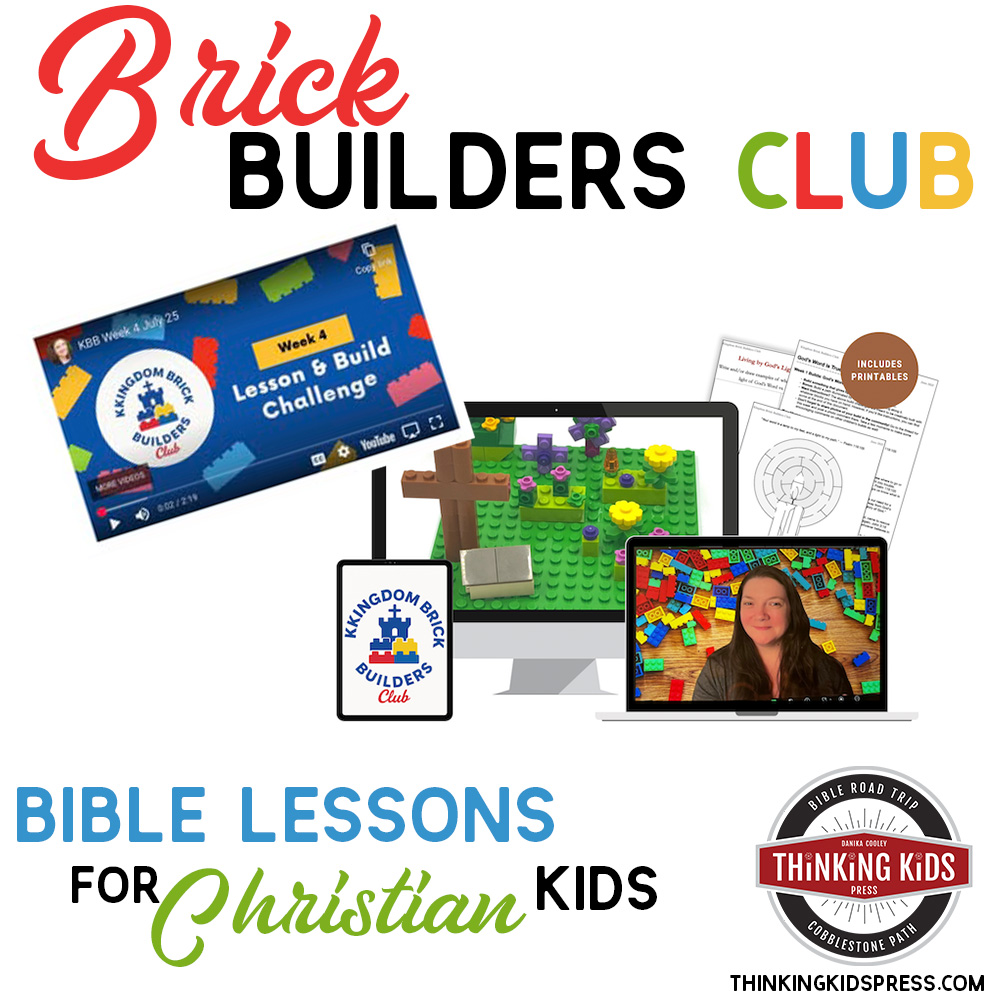
Bible Resources for Your Kids
Learn More HereLearn More HereLearn More HereLearn More HereLearn More HereLearn More Here
More Thinking Kids Posts You’ll Love