

Some days, I wanted to be a kid. I wanted to hang out, eat food someone else made for me, and live responsibility-free. Some days, I wanted to be an adult. I wanted to make important decisions, handle major responsibilities, and understand real truths.
I didn’t go from kid to adult all at once. I did it ungracefully, sometimes resentfully. I made a lot of mistakes–some of them serious.
Do you remember how that felt?
I believe we can help our teens become grown-ups while we disciple them for Christ. I believe we can live in harmony, and help our kids navigate the thorny fields of adolescence. It isn’t easy to respectfully parent a teen, but it is possible.

10 Ways to Show Respect for Your Teen
1. Listen to your teen
Our teens are dealing with developing minds, and they have a plethora of ideas and opinions. It’s our job to listen, just like we would listen to a girlfriend over chai tea at the little coffee shop down the street. We don’t need to agree with whatever is spilling out of their mouths–we just need to stop teaching and directing them long enough to hear their hearts.
Consider this: If you don’t know what your teen is thinking, how can you speak truth to any error that may percolating in the corners of his brain? How can you pray effectively? More importantly (because God already knows what is going on in there), how will your teen feel respected if you don’t set down the spitting pan of bacon, look into her eyes, and hear her heart?
2. Give your teen’s thoughts and feelings weight
Our teens are almost adults. We’ve had anywhere from thirteen to eighteen years to teach them how to live, how to reason, and how to discern. They are preparing to greet this wide world we reside in all on their own. These are the years they will set stakes in the ground.
Will they follow Christ? Will they live according to His standards? Will they continue to pursue Him? Our children are becoming grown-ups. They deserve to have us validate their thoughts and feelings.
Again, this doesn’t mean you must agree with everything your teen thinks or feels–more than likely, you won’t. It just means you get to be a safe place for them to work through their angst and confusion. You value your teen–her ideas mean something to you.
3. Find ways for your teen to put their faith into action
Not only do our teens have valuable thoughts and ideas, they have important skills, abilities, and desires as well. Our children don’t need to wait until they are 30 to put their faith into play–they can impact the kingdom of God right now, if their hearts are regenerate.
Get creative. Brainstorm with your teen, pray, decide on a goal, then help open doors to that goal. But let the majority of your teen’s outreach rest on his shoulders. This is his walk with God. The practical application of a child’s faith can be as diverse as God’s kingdom. I’ve seen some amazing stories, and some under-the-radar faithful teens.
4. Ask your teen for help
I know, I know. We don’t need help–until it comes to the dishes or the bathrooms. Ask for help anyway. You may be surprised.
Your teen may excel at research, planning, technical support, landscaping, or speaking. How will you know if you don’t give her an opportunity to practice? You are training your child to be part of a community–this is the time for her to come alongside you and become part of the team. One of my teens just named a new book series I’m working on.

Grab your FREE Bible Study Tool Kit–over 130 pages of Bible resources for your family!
5. Increase your teen’s study
We must not let our teens leave home without a clear understanding of God’s story for mankind, God’s nature, the gospel, and their responsibilities in the Kingdom of God. Move your child from spiritual milk to spiritual meat by increasing the Bible study you expect at home.

You’ll notice that in Bible Road Trip, the Rhetoric level of study is substantially heftier than the Upper Grammar level. By 10th to 12th grade, teens using the study will read the entire Bible, study an entry-level college text, and memorize quite a few Bible verses each week. They will also begin to share what they are learning with others via a blog or a video broadcast. Likewise, Dialectic students (7th – 9th grades), have an work load that is increased from the Upper Grammar level, working from an adult text written for laypeople.
We expect our teens to wear clean socks, do chores and complete their homework. Why don’t we expect them to study the most important book they’ll ever encounter?
6. Increase your teen’s freedom
As our teens prove they are trustworthy, we must increase their freedom. Anything less breeds discontent and resentment.
I’m not saying you should place your teen in danger. But the teen years are the perfect time to allow our teens to practice small freedoms, increasing them as our teens stay within the parameters we’ve outlined. Now is the time to show your teen you trust them.
7. Increase your teen’s responsibility
We’re raising grown-ups; we must allow them to grow up.
You can accomplish this in a number of ways: allow your teen to lead prayer or Bible reading at family worship once a week, or daily. Ask your teen to help plan meals for the family. Let your older teen get a job (with a limited number of hours so that they can still study and be a part of the family). Transition individual responsibilities (like paying for their own car insurance) to your teen.
Let your teen practice adult responsibilities in the familiarity of your home, with a safety net, before he must truly be an adult.
8. Don’t freak out over your teen
I know–this one sounds silly. Here’s the deal: as we increase freedom and responsibility for our teens, they are bound to make a mistake here or there. We can’t overreact. We must remain calm.
When your teen blunders through a situation, remind her where the boundaries lie. Discuss the issue at hand. Never, ever discuss the issue from two months ago. You hate it when your spouse does that to you, right?
That said, respect your teen enough to allow real life consequences. By this age, our teen’s mistakes have true consequences. If you are having trouble determining the natural consequence of a given action, envision the results if your teen lived on their own in the real world. How much would their mistake cost? Who would it impact? One of my saddest parenting moments was reporting something one of our older teens did to the authorities. We didn’t lecture. We discussed the issue, expressed true pain over the choice our teen had made–and let that teen live with the consequences of the deliberate choice they had made.
9. Love your teen for who they are
Our teens were uniquely created by God, and they are designed just as he envisioned them. Our teens are also sinners–they are going to do things we dislike. The teen years are an opportunity to love our kids unconditionally. We can extend to them grace, love and forgiveness–just as God has extended those things to us.
10. Your best tip for respecting your teen
No true conversation is one-sided. What do you think is a great way to show respect for our teens?
Bible Resources for Your Kids
Learn More HereLearn More HereLearn More HereLearn More HereLearn More HereLearn More Here






60 Scriptures You Can Pray

The Bible is full of prayer that you can pray too!
How do you pray when you don’t know what to say? The Bible holds the answer.
God doesn’t expect us to pray without guidance. In fact, Scripture is full of examples of ordinary people approaching our extraordinary God in prayer.
Award-winning author Danika Cooley believes that praying God’s Word teaches us how to best communicate with our Lord:
“There are so many lessons we can learn from Scripture about how to approach God and what to expect when we do.”
Danika’s devotional 60 Scriptures You Can Pray covers eight types of prayer from the Bible, the expectations we should have when we pray, and the right heart attitude for prayer.

- Praise | We adore God for who he is.
- Thanksgiving | We thank God for all he has done.
- Confession | We admit our sin to the God who saves us.
- Supplication | We humbly ask God to provide for our needs.
- Intercession | We ask God to meet the needs of others.
- Deliverance | We cry out to God for help in times of trouble.
- Lament | We bring our sorrow to God, our comforter.
- Guidance | We ask for God’s help in determining his will for our lives.
When you read 60 Scriptures You Can Pray, you will:
- Develop a habit of praying daily over a two-month period
- Learn more about prayer in Scripture
- Understand eight different types of prayer
- Expand your understanding of how to pray biblically
- Become better acquainted with God, His Word, and why we pray
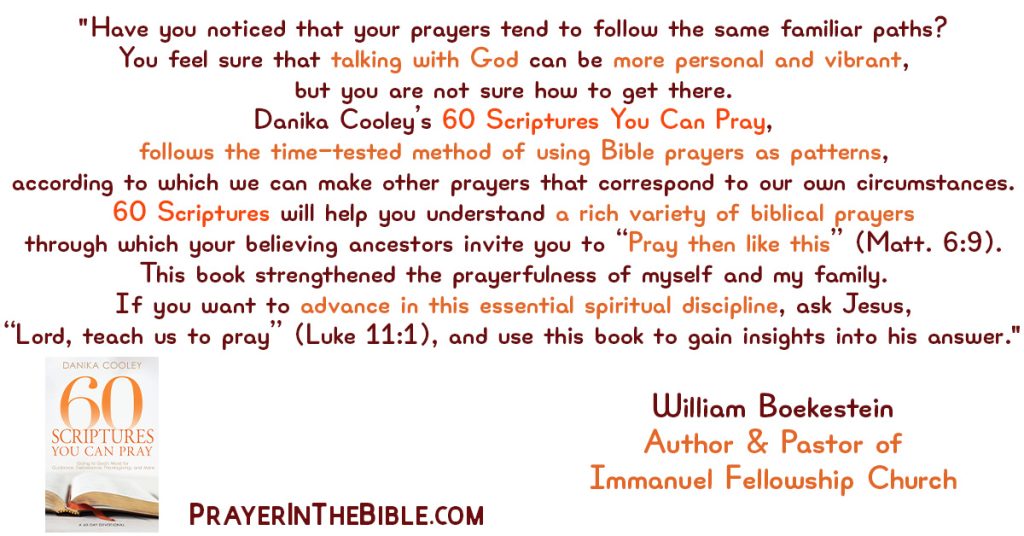
Packed with thoughtful explanations of biblical prayer and practical application in each devotion, 60 Scriptures You Can Pray is the tool you need to learn more about prayer–straight from God’s Word.

Want to equip the women in your church to pray biblically?


Thinking Kids Posts You’ll Love